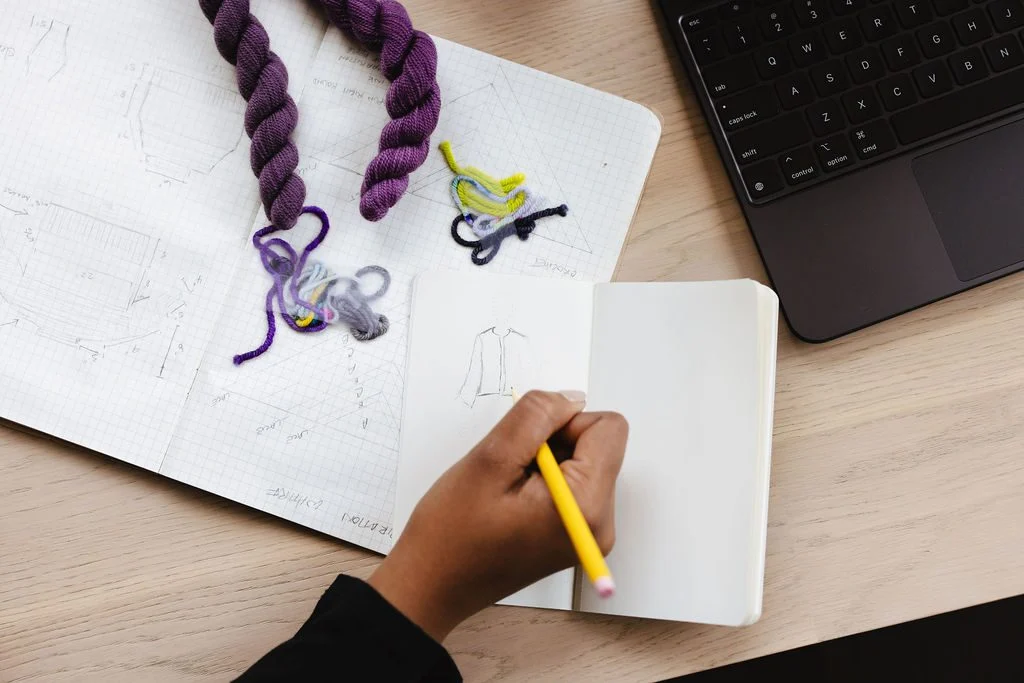


Multigenerational knitting designer Paul Haesemeyer has a strong interest in knitting as a storytelling medium. A lifelong knitter who has been stitching since second grade, Paul enjoys designing for the stage as well as real life. He has test-knit for designers such as Norah Gaughan and Anne Vally; and has done work for the Metropolitan Opera, Alabama Shakespeare Festival, and more. He is working on his first knitting book.
Here, Paul shares a first-hand account of how he developed his approach to knitting pattern layout, using experimentation and feedback to create patterns that communicate clearly with knitters.
Ever since I started designing knitting patterns four years ago, I knew pattern layout would be key. After all, if knitters can’t understand the patterns I’ve worked hard on, then I have failed as a designer. After designing the sample, the designer’s most important job is to efficiently and effectively communicate the pattern’s expectations. This is no easy task, but there are simple ways to do so.
Why Pattern Layout Matters in Knitting Design
I’ll be the first to admit it took me publishing multiple patterns before I settled into what I use now. When I first started pattern writing, I knew it needed to connect visually with my website. Therefore, I used my website logo and font choice and applied it to my patterns.
Consistency is important for maintaining brand marketing and storytelling. If your materials don’t match, it might translate to the customer as a lack of care. Because of corporate marketing, customers expect consistent branding, and they respect small businesses who take time to establish their visual identity. These choices established my brand as a designer and as a professional. I use my logo and selected font on my resume, too!
Using Fonts and Formatting to Improve Pattern Clarity
Now, most fonts are publicly available; so while other people may use the same font, the way I use it is unique. When working in Google Docs, I realized some of my bolding choices had changed during file transfers. This was a complete accident, but this accident made me realize how much easier it had become to communicate what’s important. Poppins—the font I use—has multiple weight options, and I use a variety of line weights within my patterns.
Play around with how font styles can help communicate key techniques within your patterns. I now bold special techniques throughout my patterns whenever I include special instructions, like when I explain Sloped Bind-Off. Sloped-Bind off has its own explanation in the special techniques section at the beginning of the pattern, so I bold it slightly to indicate to my customer to pay attention here. A choice that was originally a mistake now helps crafters identify what they need.
Schematics and Measurements: Knitwear Designing for Readability
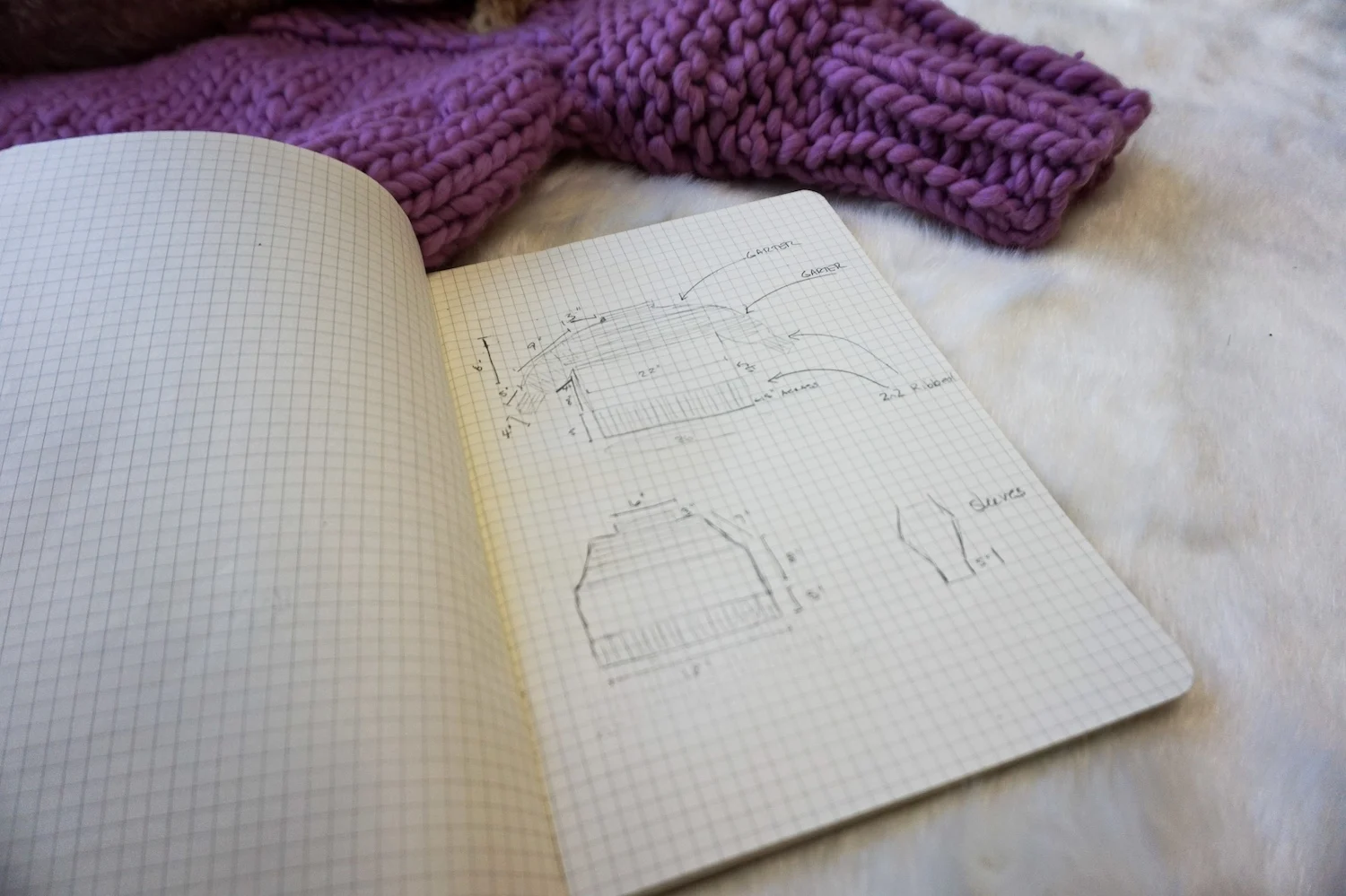
Within pattern writing, there is room for exploration and development. One example is schematics and measurements. It saved me time and energy to simply label key measurements on the diagrams rather than including measurements on the schematic itself. It was also confusing for crafters to identify their size’s measurements; it was cluttered. By placing the measurements below the diagram, it allowed knitters to identify and highlight their size faster, referencing the scaled schematic diagram for general shapes.
My first published patterns have not been updated yet to reflect this change. And that’s okay! This is part of the research and development crucial to pattern writing and publishing. Eventually, when I have the capital and time to invest in reformatting old patterns, I will. Right now, it’s more important to get the ideas to the customer.
Why Testing and Customer Feedback Matter in Pattern Writing
Testers and customers provide valuable feedback, too. While testing can be time consuming, it can provide valuable insight that my tech editor or I might have missed. Frankly, customers who buy patterns have the most valuable opinion. Testers happen to be closest to the designer, but customers help designers realize what’s working and what isn’t.
My testers often comment on the document itself, asking clarifying questions exactly where there’s confusion. This can be page numbers, references, or a variety of other comments they have about the pattern.
[Learn more about pattern testing with this article.]
What Knitting Other Designers’ Patterns Can Teach You
Knitting other designers’ patterns is also informative. There are a variety of ways designers express themselves through text. Some designers use vector schematics, while some draw by hand. For me, I knew that since my designs are fairly complicated and whimsical, I wanted to contrast this with a sans serif modern font to provide a clean look against the design’s whimsical complexity. Vector-drawn schematics made in Adobe Illustrator mirror the sans serif choice and continue the contrasting layout style.
As I knit from other patterns, I learn what information I like to have easily accessible. In this case, it was having my schematic and measurements at the very beginning of the pattern so I could quickly understand what shapes I’m knitting. Then, I follow with the most important information: gauge, needle size, and materials. It’s also why I provide yardages in my pattern descriptions online.
When I research patterns, I am often shopping from stash first. If the designer doesn’t have the yardage available for free, I am less likely to buy the pattern because I want to make sure I have enough materials before I buy. To me, it can unintentionally signal a lack of consideration for the knitter’s time and budget. I want to establish trust with my customers; therefore, I provide all the useful information I can beyond the actual pattern numbers.
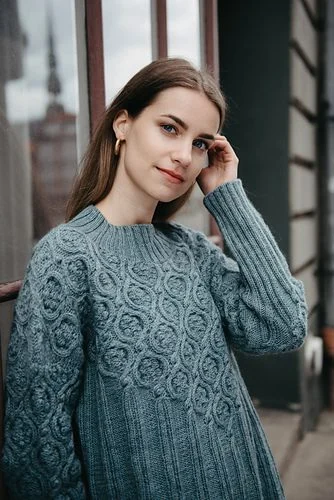
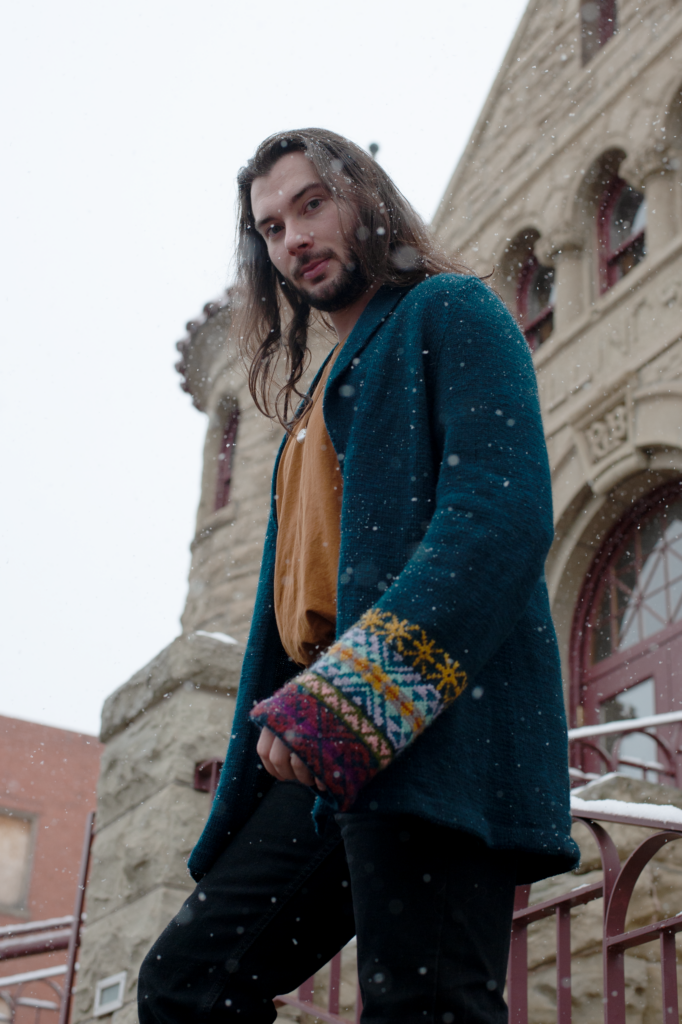

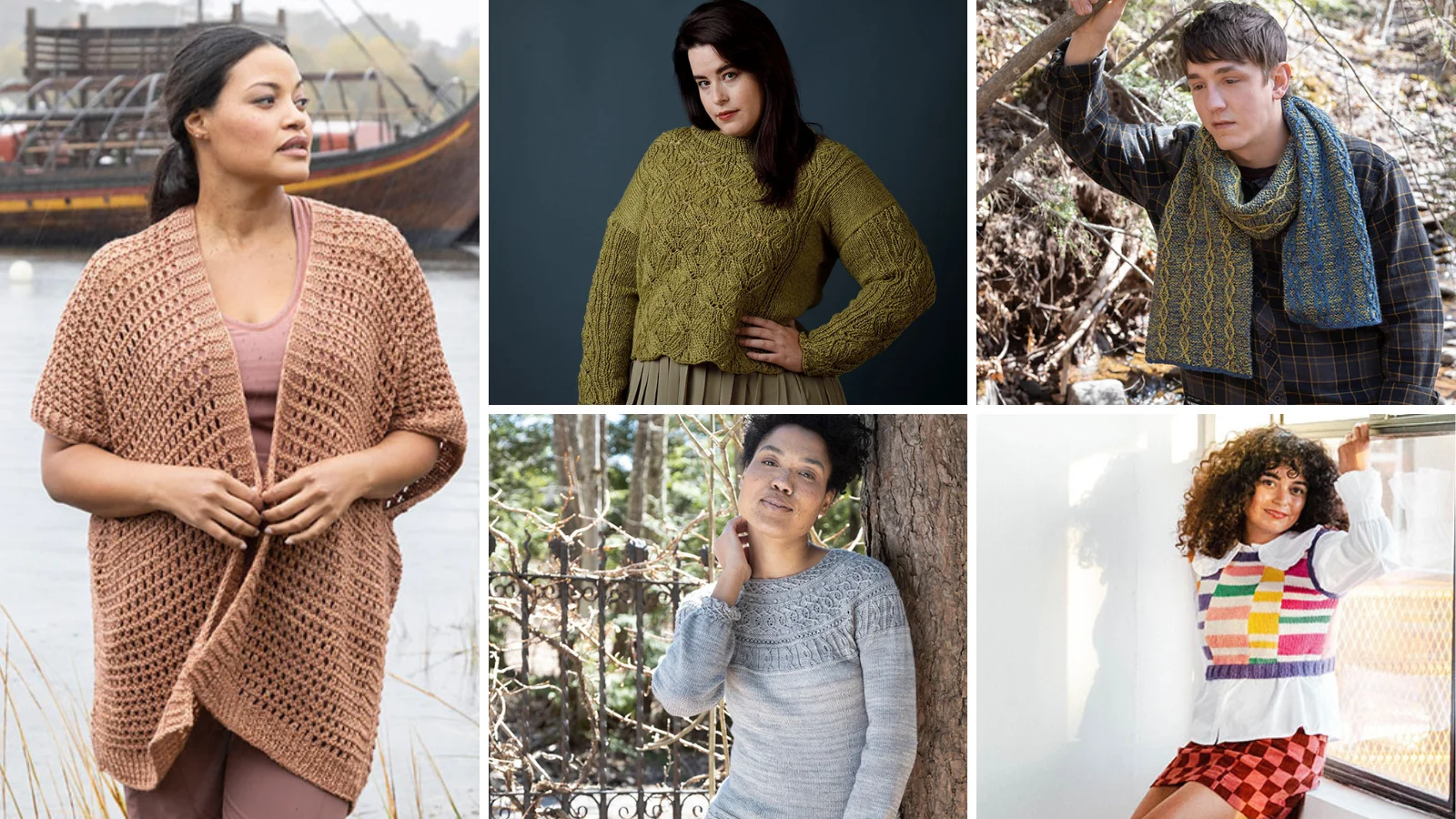
[Pictured: Fearless Pullover, Pendragon, When Harry Met Lucy]
Photography and Layout That Support Knitting Pattern Instructions
Part of customer trust is in providing clear, informative, and beautiful photos of the sample. Then ensuring those photos complement the pattern instructions. I have designed garments for companies where the main motifs are obscured by a styling choice. Yes, the styling helps provide the atmosphere and attitude for the design, but customers want to see the garment in its entirety. They are investing their time and resources; they want to know what to expect in the final project. This is also why I prefer garments and accessories to be modeled rather than photographed flat. Sure, they look beautiful on a table, but I want to see how it’s worn on the body, since ultimately, the garment will be used. I often try to mix flats with modeled photos, and then coordinate photos with complementing pattern sections.
Photos help arrange and ensure the sections flow seamlessly without interrupting the flow of reading. And they provide excellent references. The back section gets photos of the back, the neckline gets neckline photos, etc. Customers want to know what to expect. With each new section, I always try to make sure it starts on a new page, rather than continuing onto the next page (unless it’s an especially long instruction). New pages create natural breaks, and I want to ensure customers don’t miss critical information simply because I had one line from a previous instruction on the following page.
[Get more tips on writing patterns here.]
Working Within Publisher Guidelines and Tech Editing Standards
Within all this, each publisher has their own pattern guidelines. But things will shift and change. It can help to return to the basics—think English class—and write the pattern using standard conventions, such as MLA style. Collaborators want to make sure pattern writers can be consistent when working within an established style. Of course, mistakes will happen, but this is one of the reasons tech editing exists. Tech editors ensure patterns are communicated well, from stitch counts to punctuation and formatting.
Because I regularly work with a tech editor, she has learned my style and knows what to correct whenever I stray from the guidelines I’ve created. Formatting a style takes time, and there will always be room to experiment within it, as long as your design is communicated effectively.