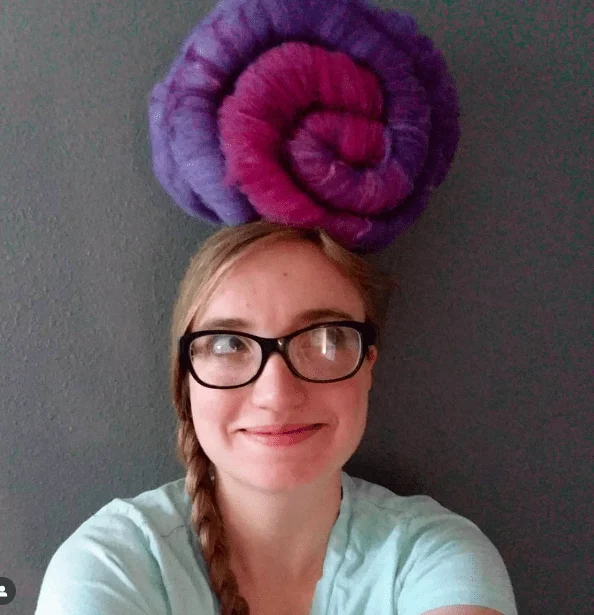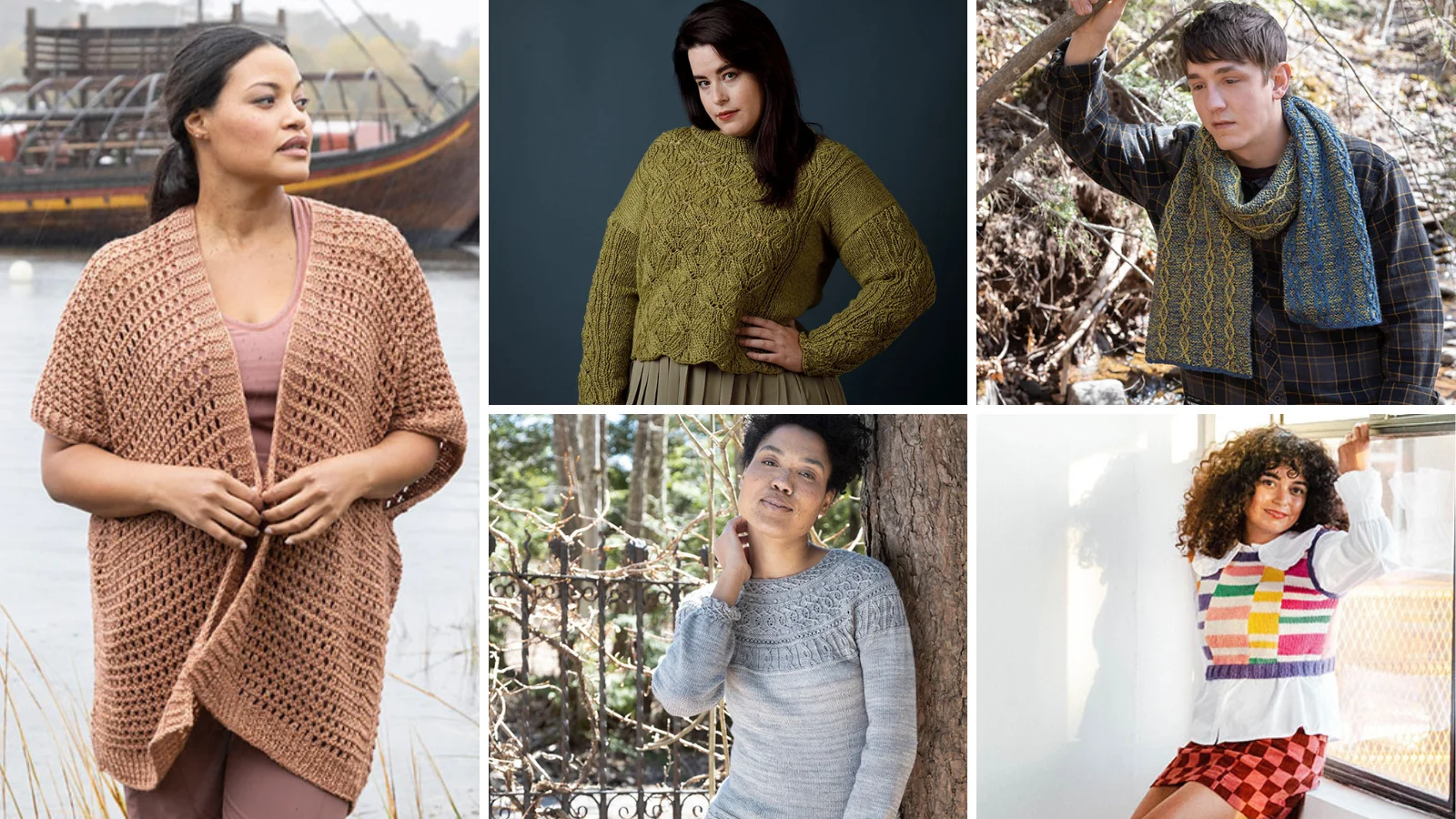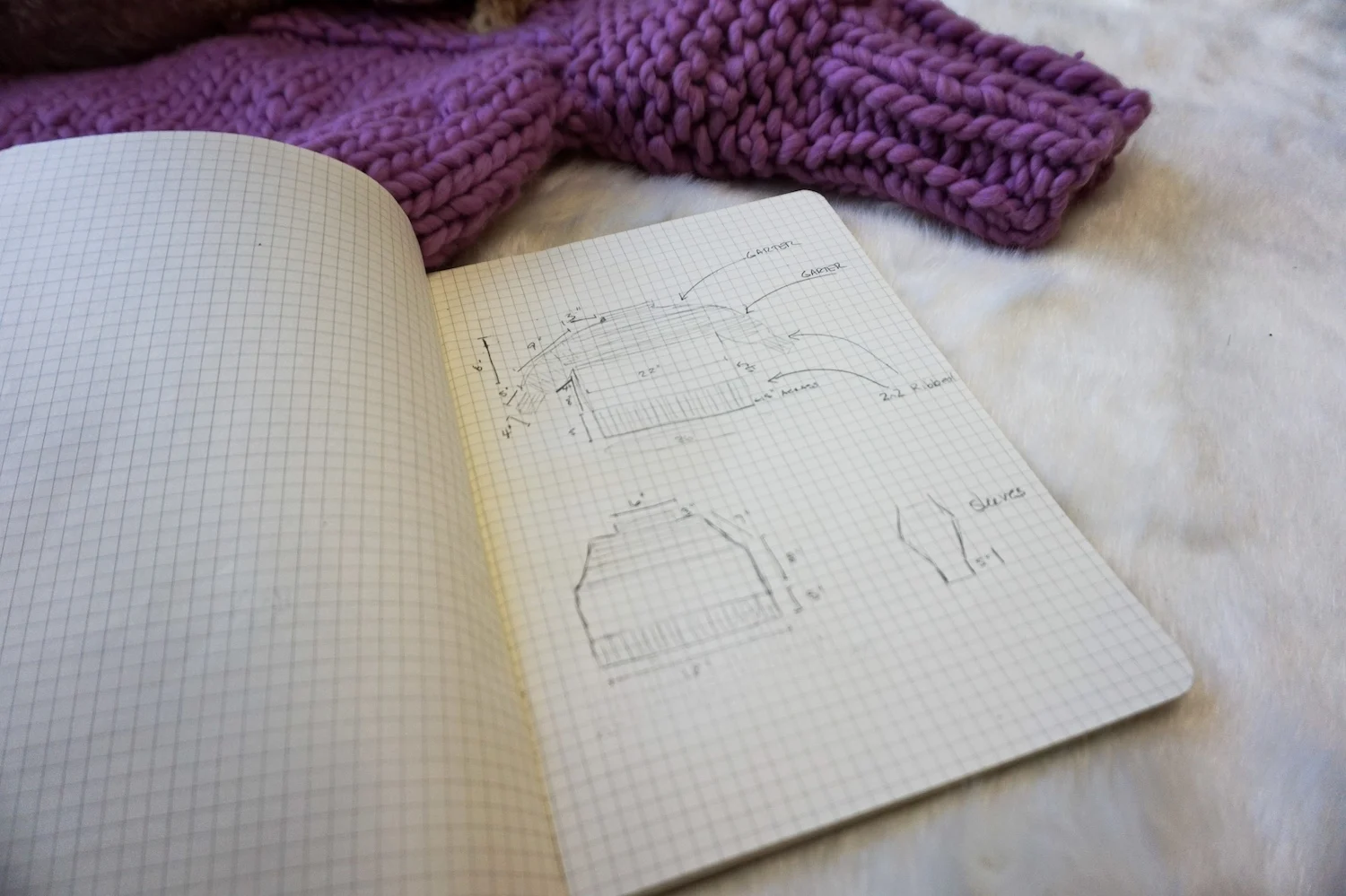


Carolyn Zick of CouleeCraft has been designing crochet patterns since 1999 and knitting patterns since 2013. She creates projects “for the sheer joy of it,” with a style that evokes whimsy and nostalgia, while also being chic and funky—designs meant to make people smile and spark conversation.
Carolyn is also a professional community builder and social marketing expert with over a decade of experience. She believes that making things by hand helps people reconnect with the process of creating and plays an important role in keeping crafting traditions alive. Here, Carolyn shares her perspective on what community really means for knit and crochet designers, and how intentional spaces can help both creators and makers thrive.
What Is a Community, Anyways? (And Why Social Media Isn’t One)
Let’s get something out of the way first: An audience on social media is not a community.
When it comes to industry buzzwords, “community” is one of the most obnoxious to me. Brands shout, “Join our community!” only to link us to their social media profiles. That’s not community, right? That doesn’t feel like what we are hoping for when we think about joining a community.
So then, what is a community?
Community is a boundaried segment of the population with unique customs, language, shared values, and rituals that give its members a shared identity.
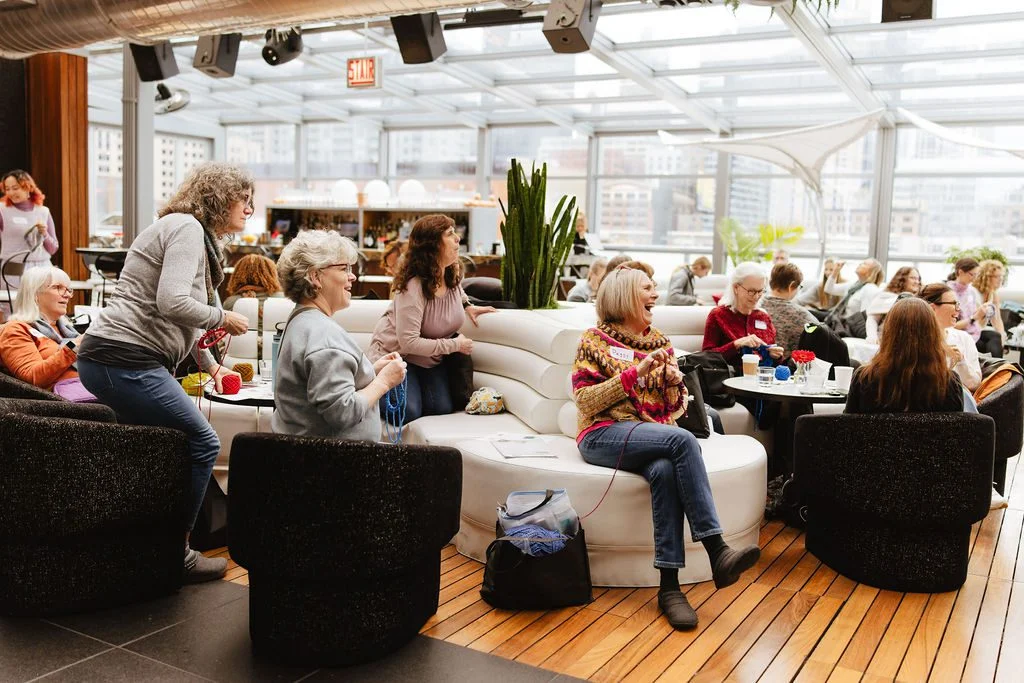
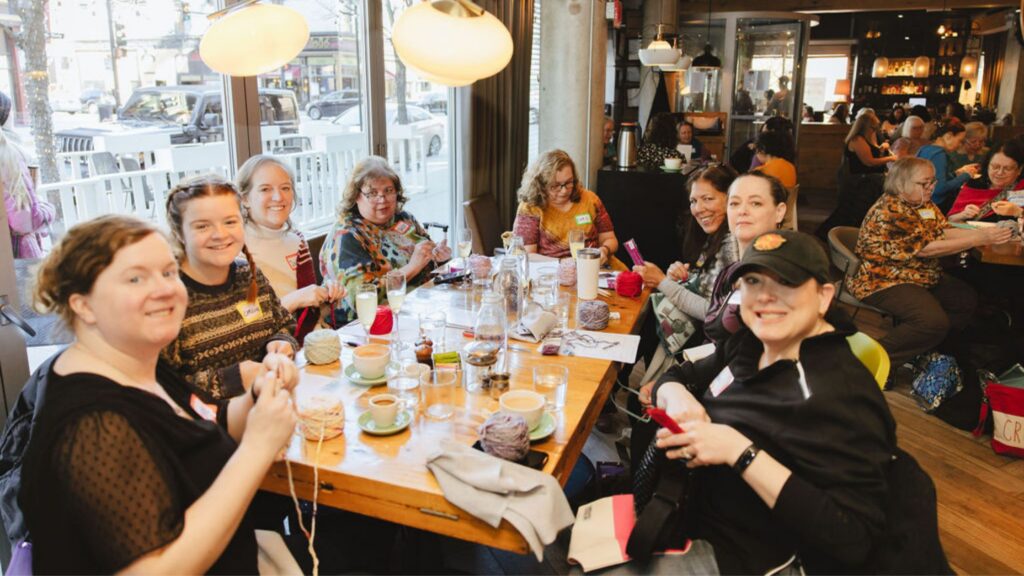
Let’s look at an example: Your Thursday night knitting club? A community.
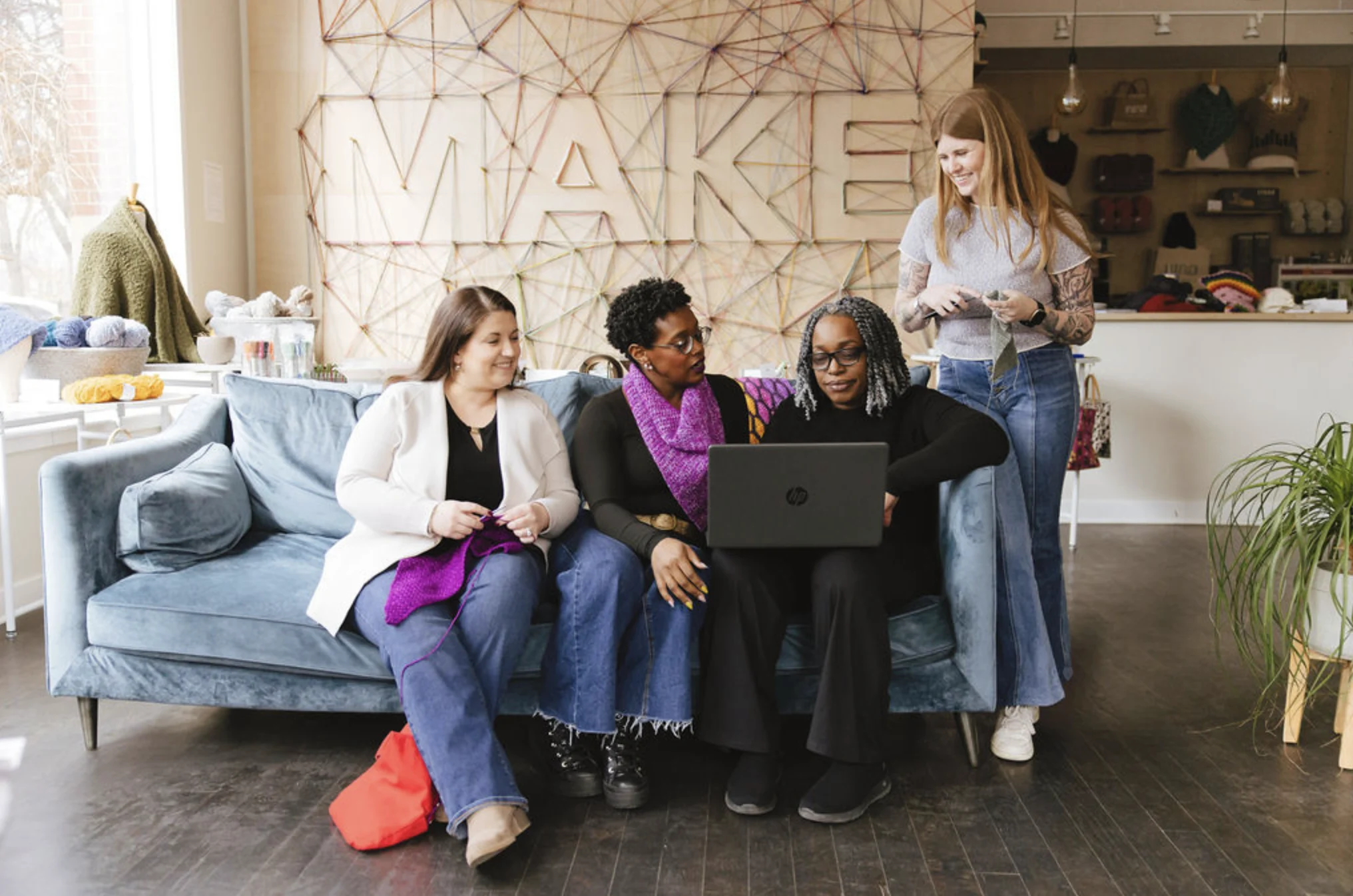
You have unique customs (I always sit in this chair, we always bring cookies as a snack), your own personal language (inside jokes and call backs to previous experiences), shared values (a love for meeting in person to discuss current knitting projects), and a ritual (meeting every Thursday). You have a shared identity: The Thursday Night Knitters. That makes it a community.
The biggest difference between a community and a social media audience is who gets to hold the virtual microphone. In an audience, the conversation is usually from one (the brand or creator) to many (the followers). Very rarely does a social media personality turn their page over to a member of their audience. The brand holds the mic and does not share.
In a community, there is space for members to direct conversation and communicate in a many-to-many format. Ideally, when they are engaging with this community, they are connecting with each other as well as with you. More on that in a bit.
Benefits of Building a Crafting Community for Designers
There is no easy “yes” or “no” on whether building a knit or crochet community is right for you or your creative brand. However, community building can open up a whole new world for designers and offer some wonderful benefits, such as:
- Insight into what crafters want from your designs, as they share their thoughts with you.
- Affinity for your designs among your community members, which can result in more sales and even promotion of your work amongst your members’ audiences, too.
- Camaraderie as you get to engage with folks who love your work and decrease the loneliness and isolation that can come from running a creative business.
- Encouragement to keep going, keep designing, try new things, and challenge yourself, since you have your community cheering you on.
Important Considerations Before Building a Crafting Community
All those benefits listed above are fine and wonderful and good, but there are other things to take into consideration before jumping into community building:
- Safety of your community members. As the builder of your community, the safety of your members is your responsibility. It is not dramatic to say that you need to consider the safety of your community as your top priority. You need to consider who is eligible to join (all ages? 18+ only? specific locations?) and what rules need to be in place to protect those members. Set out clear guidelines and rules before you launch, and make sure the platform you are using has means to enforce your rules.
- Time you will put into building it right. Building a community is not a quick task. It is an ongoing undertaking that builds up over time. Community building is an effort that compounds the more you do it. To build a thriving community, laying the foundation is key. Eventually, members will begin to develop rituals, routines, and discussions themselves, but only if you have spent the time and effort to empower them to do so.
- Management of the community for the long term. Like a garden, communities need someone to tend to them. Whether that’s you or a trusted moderator you enlist to help, keeping your community engaged and active takes dedicated effort. Consider who will reply to messages, post conversation prompts, read discussions, and overall take an active role in leading the community.
- Presence within the community. Similar to management, you need to think about how you will show up in your community. Typically, for creator communities, members expect to be able to engage with you—the creator! Are you comfortable interacting with members of your community? Does the idea of having a dedicated space to engage with folks and have them engage with each other excite you? It’s important to be honest as you consider this: If that kind of virtual socializing sounds exhausting, community building might not be the ideal next step for you.
- Cost of the tools to create a safe space. Some community-building platforms cost money. Do some research before picking a platform, and decide what cost point and feature set is right for you. Consider if the platform has message or file-sharing limits, moderation tools, or other safety features. Pro Tip: Discord and Slack are both free-to-use platforms with great moderation tools.
How to Start Building a Crafting Community
If you’ve made it this far and community building sounds exciting to you, let’s get into what steps you should take before and after launching a community.
Define Your Community Offer and Value
Community is not a “build it and they will come” situation. There needs to be a reason to gather. Think about some low-lift things you can offer that might be interesting to your fans. Here are a few ideas to get you started:
- Dedicated pattern support
- Testing opportunities
- Live virtual hangout events
- Sneak peeks at upcoming designs
- Fun group challenges or events (Pro Tip: CALs or KALs are great for communities!)
- Group charity or activism opportunities
Ask Your Audience What They Want From a Community
You have to ask your audience what they want to do in this potential community. Send out a poll or reach out individually to your most engaged fans and ask them, 1) if they would be interested in joining a dedicated private community you create, and 2) what they would expect to do in that community. Their ideas may spark new insights or inspire what you offer the community!
Choose the Right Platform for Your Crafting Community
There are so many community-building spaces to choose from, it’s overwhelming! My advice is to build simple and lean at first to see if you want to manage your community long-term. Do not feel like you need to pick a platform that has every single feature you can dream up. My current top picks for free platforms for beginner community builders are Slack or Discord. Both have great safety tools and solid intro features on their free plans. Other things to consider when platform shopping:
- Can you export your member data? (You can’t on Facebook Groups)
- What types of things can you post? Are there text limits? File limits?
- Can you host events easily or integrate with tools that allow you to?
- Is there a higher cost when your membership grows to a certain number?
- What are the safety and security features? (Are you tired of me mentioning this one yet?)
Bring in the Beta Testers
Test your community platform with a trusted group of beta members. A group of up to ten is ideal for this. Have them go through onboarding and navigate the basic areas of the community and give you feedback on how the experience is for them.
Promote Your Crafting Community Before Kickoff
Tease out your community launch to your most dedicated fans. Whether that’s an email list or via social media or a YouTube video (ideally all the places!), start letting people know a community is coming.
Launch Your Community With an Event (KALs, CALs & More)
A great way to get folks to join your community is to kick it off with an event. Host a KAL or CAL and use that as a driver to get people joining and chatting. Start a livestream series exclusively for the community. Dream up a special event that you can use as the catalyst to get folks interested in being part of the fun.
Encourage Member-Led Conversations and Connections
Make sure folks are introducing themselves, and start a culture of playing matchmaker with new members. (“Oh! You need to meet Bob! They are learning to knit socks, too!”) Get folks excited about connecting by setting an example of asking questions and letting folks talk. Remember, communities are places where members connect in a many-to-many way. It might start slow when it comes to engagement, but sow those seeds and watch the community connections blossom over time.
Celebrate Your Shared Knitting or Crochet Community Identity
A huge part of the draw of a community is the folks who gather there. Remember, community develops a shared identity! Think about the fandoms you know about; members of those communities wear their identity with pride: Swifties, Trekkies, Whovians, etc. They are excited to meet others within the community and geek out about their shared identity.
Let your members help shape the identity of the community, and give them ways to share it outside of the community. Whether it’s exclusive swag, an image they can post on social to brag about their membership, a funny title within the community, or something else entirely, start finding ways to celebrate the identity folks are carving out.
In my community, I’ve rewarded some of the most active folks with custom emojis from their suggestions that anyone can use to react to posts. Some of those emojis have become part of our identity in the community!
Listen and Listen and Listen to Your Community
Launching your community is not a one and done thing. You need to keep listening to the needs and wants of the members and let those things shape the future of the space. You do not need to put every piece of advice into action. I am notorious for not making new subsections in my community (despite folks requesting them) because I want to keep conversations centralized rather than scattered.
Moral of the Story: Member-First Creative Communities Succeed Long-Term
All those lovely potential benefits for designers who want to build a community do not happen without centering your community-building efforts on the member experience. Keep the space safe, inviting, and fun and you will build a community of folks who wish you nothing but continued success—and will help you on your journey to get there.