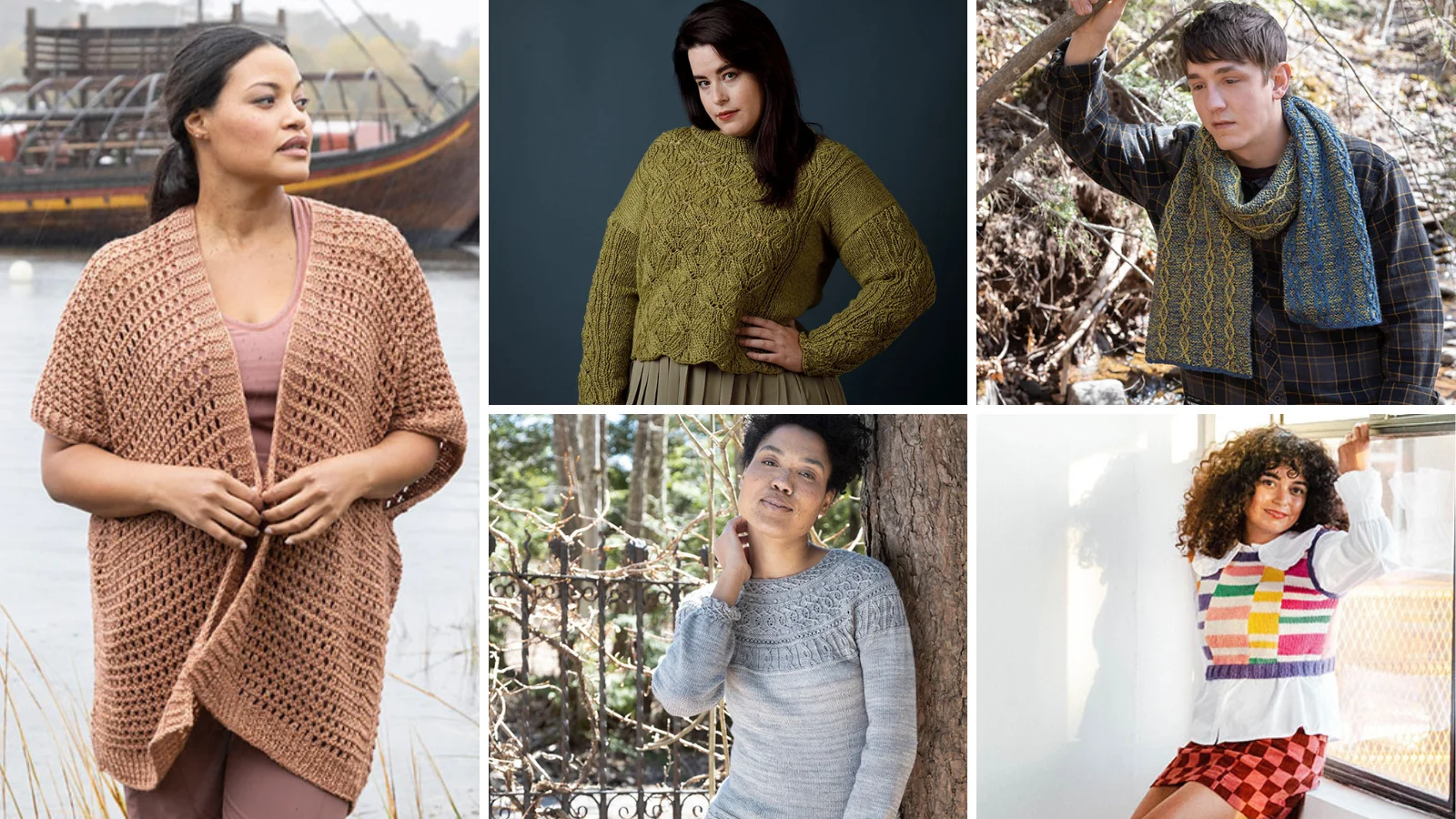


Knitting since childhood and later turning to crochet, Ciara Doyle of The Fairythorn creates size-inclusive knitting and crochet patterns with a focus on natural yarns and slow-fashion principles.
In addition to their design work, Ciara supports handmade sellers in navigating the EU’s General Product Safety Regulation (GPSR). They provide representation for yarn and fabric craft creators, such as knitting, crochet, and sewing designers, as well as other artists and makers selling digital and handmade goods.
In this guest post, Ciara explains what the GPSR is, who it affects, and what designers need to know about selling patterns within the EU and Northern Ireland.
What Is GPSR and Who Does It Apply To?
The General Product Safety Regulation (GPSR) came into force in December 2024. It affects designers who sell patterns to customers in the EU, including through global platforms like Etsy. Designers outside the EU can choose to either block sales to the EU and Northern Ireland or meet GPSR requirements. But if you sell to customers in the EU, you must comply.
The GPSR protects people in the EU from unsafe physical and digital goods. It applies to downloadable products, such as PDF patterns—including freebies and lead magnets.
It does not apply to:
- Services (e.g., tech editing, if you don’t sell patterns).
- Patterns only viewable online (e.g., blog posts or app-exclusive content like Ribblr).
Downloadable digital products are generally considered to be within the scope of GPSR and must meet its requirements when sold to EU customers.
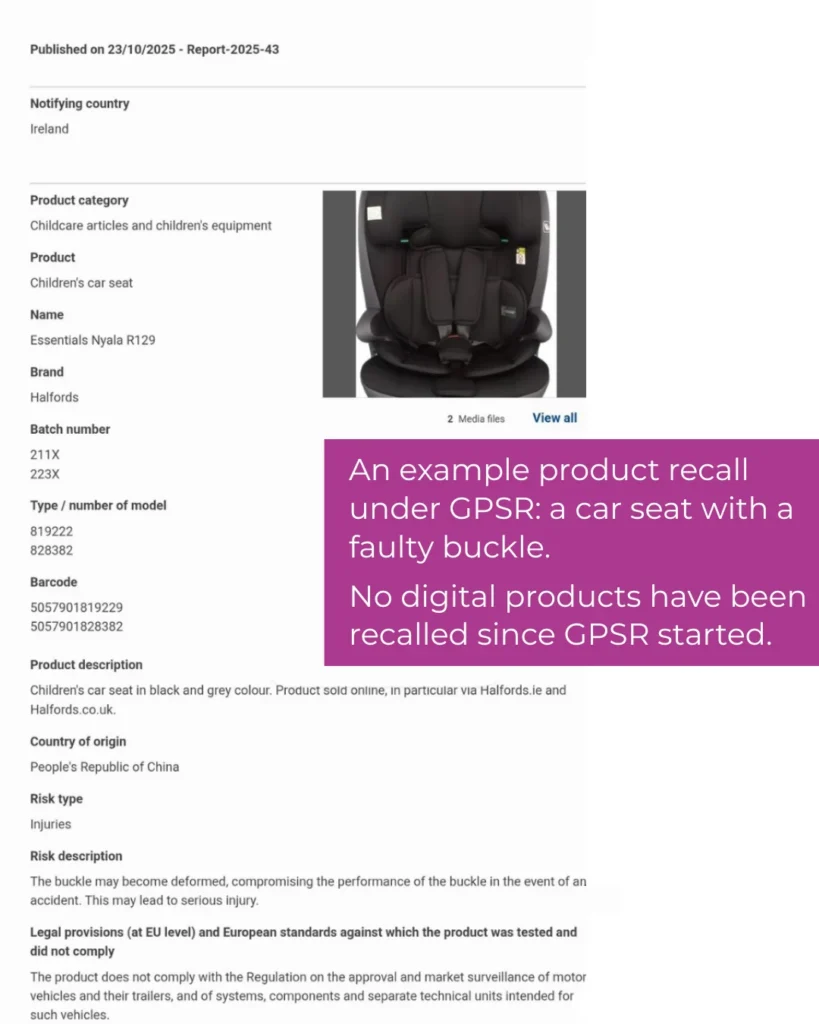
To better understand how GPSR functions in practice, you can review the Safety Gate website, which lists the banned or recalled non-food products in the EU. You’ll notice no knitting or crochet patterns—or any digital products—have ever been recalled. Instead, you’ll find high-risk items like baby pushchairs (strollers) or car seats with faulty catches that could endanger a child.
Relax—it’s not that scary! While “regulation” might sound intimidating, digital knitting and crochet patterns are considered low-risk products: They can’t cause physical harm or a house to burn down!
For most designers, selling under GPSR just means building a few good habits. Let’s break it down.
How to Comply with GPSR as a Pattern Designer
1. Create a Unique Product Identifier for Every Pattern
Your product must be identifiable with a unique name or code. For example, I just launched a pattern called “Snowy Owl” on Ravelry, and the URL became Snowy-Owl-4. This tells me that three other “Snowy Owl” patterns already exist on Ravelry.
If someone complains about a “Snowy Owl” pattern, Safety Gate needs to know which one they’re referring to. A clear product code makes that distinction possible. Add a unique identifier to each pattern—such as a code in the footer. For example: “SN1025CD” for “Snowy Owl, November 2025, Ciara Doyle.”
2. Provide Clear Contact Information
You must provide contact details. This can feel daunting, but the law was designed for factories, not indie designers! Include your email and postal address on every pattern.
If you’re uncomfortable sharing your home address, discuss alternatives with your EU Representative (see number 4 below), such as a business address, and how to get one.
3. Prepare Your GPSR Safety Documentation
You’ll need technical documentation to prove you’ve assessed your product’s safety. Both you and your EU Rep (see number 4 below) should keep a copy.
This might sound complex, but it doesn’t have to be. For my clients, I provide a secure form with basic questions, such as:
- Did you embed a virus in your PDF? (No, of course not!)
- Did you test or tech-edit your pattern?
- Is your font at least 12pt and sans serif? (The EU recommends this for readability.)
The form takes about 60 seconds to complete and serves as documentation of your safety assessment. There are no right or wrong answers, except for the one about computer viruses. It just shows proof that you reflected on what standard is appropriate for this specific pattern.
4. Appoint an EU Representative (If You’re Outside the EU)
While most requirements are straightforward, some designers may need to hire an EU Representative (such as myself) which could involve a small cost. If you live outside the EU, you need an EU Representative with a permanent EU address. This person doesn’t need to be a lawyer, and many factories appoint their EU warehouse manager for this role.
Your rep’s job is to:
- Hold a record of your safety assessment forms (not the patterns themselves).
- Be easily contactable.
- Relay any safety-related messages to you (though this is unlikely).

How Much Does an EU Representative Cost?
If you have family or friends in the EU, you can ask them to act as your rep, no cost required. Otherwise, hiring a rep is affordable. Through The Fairythorn, I offer EU Representative services for low-risk digital goods starting at €60 per year (approximately $65 USD).
Tip: When searching for quotes, use terms like “low risk” and “digital goods” to avoid inflated prices (e.g., quotes for factories selling car seats will be far higher).
What Types of Products Require EU Representation?
EU Representation services are generally used for:
- Knitting, crochet, sewing, quilting, or other craft patterns.
- Digital downloads (primary focus).
- Low-risk physical goods (e.g., printed patterns, yarn kits, hand-dyed yarn, fabric, notions).
Benefits of GPSR Compliance for Knitting and Crochet Designers
1. Opens Up EU Markets
GPSR compliance means you can continue selling to the EU, a market many designers now avoid due to the new regulations. With potentially fewer competitors, your patterns may stand out more and attract more EU sales than before.
2. Looks Professional Everywhere
Being GPSR compliant signals to all your customers—inside and outside the EU—that you run a serious, trustworthy business. It’s a mark of professionalism that can boost your reputation globally.
3. Provides a Better Shopping Experience for EU Buyers
Shopping on Etsy has improved for EU buyers. AI-generated and unauthorized patterns are less likely to meet compliance requirements, so they’re often filtered out. By complying with GPSR, you become part of a trusted, high-quality marketplace, helping your patterns shine and giving buyers confidence in their purchases.
Final Thoughts on GPSR for Designers
GPSR is all about protecting consumers. For designers, it’s mostly a matter of good habits and clear documentation. The process is simple, affordable, and gives your customers confidence in your products.