

Knitting since childhood and later turning to crochet, Ciara Doyle now creates size-inclusive crochet and knitting patterns with a focus on natural yarns and slow-fashion principles. Through The Fairythorn, they publish carefully written, thoroughly tested patterns that prioritize both the process and the finished garment.
This article is the last in our three-part “Pattern Testing in Practice” blog series, in which knit and crochet designers share their individual approaches to running pattern tests—from getting started to building collaborative relationships to developing systems that make sense for them. (If you missed the first two installments in this series, check them out hereand here.)
As a neurodivergent designer, Ciara shares the systems that help them run pattern tests without overwhelm. Their story is a reminder that every designer’s path looks different—and that the most effective testing process is the one that supports your creativity, your limits, and your testers.
Do you dread running pattern tests? I do! Do you find that having your patterns tested challenges your organizational skills more than any other part of the design process? Yup, me too.
Here are some questions and answers—from a very ADHD designer—aimed at anyone who finds it difficult to be organized with their pattern tests. These are the systems that finally made testing manageable for me.
Question 1: Does My Pattern Need to Be Tested?
In my opinion, you don’t always need to run pattern tests. You might be able to skip the testing altogether and choose a less stressful alternative. What that alternative is depends on the reason you are testing your pattern. So, that brings us to the question: Why test?
I test to check for errors. But… pattern testers aren’t primarily trained to catch technical errors; tech editors are much more equipped for this. On the other hand, tech editors are expensive—but only if we forget to value our time. If I look at the costs of writing a pattern (where I factor in minimum wage for every hour worked as a recognition of my time), then tech editing comes out much less expensive than pattern testing.
I realize I can produce patterns much faster (and earn more!) by focusing on tech editing. This is why I no longer pattern test free patterns on my blog. But I still pattern test larger patterns that I intend to sell. Because checking for errors isn’t the only reason to pattern test: I test as market research and social proof.
I have launched some patterns after only tech editing and others with several tester projects attached. There is no competition, but tested patterns do tend to sell better. (In my observation, this doesn’t affect free patterns, but it’s super important for me if I’m planning on selling.) I know many of the really big, successful designers don’t pattern test; their name is social proof enough. And I dream of being there one day. But that day isn’t here yet, and I still need testers for my premium patterns.
So, in short, not all patterns need testing. Cut yourself some slack and don’t test when not needed. Use a less difficult form of quality control such as tech editing. But for those patterns that do need testing, we still need to find a way to make the task as easy and stress-free as possible.
Question 2: How Many Platforms Should I Use for Pattern Testing?
I had an epiphany about testing, and it came about because I was running several tests at once—and lost several testers. No, they didn’t ghost me after I sent them the pattern—I ghosted them. Because I had forgotten what platform I had been using to communicate with them. I went searching for our messages and couldn’t find them. Months later, they surfaced on a seldom-used email account I never check, with testers upset and angry at me for ignoring them. That was my bad—and the moment I realized something: You put your own oxygen mask on before you put on someone else’s.
Now, I always put on my proverbial oxygen mask first: I make the testing process suit me before it suits my testers. I used to be a right softie. Tester 1 likes Instagram. Ok, let’s chat there. Tester 2 likes email. Fine, here’s my email. And so on it goes.
Personally, I cannot do multiple platforms. I’m not convinced anyone really can, in truth. Studies show that us humans may be much worse at multitasking than we think.
My tests are run on Ravelry. Always Ravelry, no exceptions. In my own tester group. Why? Because I can keep 100% of the process in one place. I write the pattern in Google Docs. I assemble the images in Canva. I recruit testers through “The Testing Pool” and get them into my personal testers group. The pattern link is sent through Ravelry IM. Very rarely, a tester can’t open it, so I create a PDF and send a link via Google Drive. But I don’t leave Ravelry to email the PDF.
“Everything inside Ravelry” is my rule.
The big bonus to this is that tests take on more of a community feel, with testers chatting and befriending each other as well as you.
But what if Ravelry isn’t for you? Some swear by Yarnpond, another platform that gives the “everything in one place” functionality. Personally, Yarnpond just isn’t for me, but it’s worth trying to see if it suits you and your needs.
Question 3: How Long Should a Pattern Test Take?
However long you think the testing process will take, double it. It still might not be enough.
Give yourself a week to recruit testers and get everything set up. Give yourself another week at the end to tie up loose ends and support testers who are running late. Allow one week for every 75 meters of yarn used in crochet, one week for every 50 meters of yarn used in knitting. “But wait, what? That would mean allowing 4 months for my sweater pattern!” That’s kind of the point.
Testing works because it shows what “typical knitters” or “typical crocheters” make of our patterns. And a typical crafter may only have a couple of evenings per week to sit and craft. They might need to pause to make a costume for their kid’s school event, or rush off to support a parent through a health crisis—or simply respond to whatever life brings.
A typical crafter might very well only make one sweater per year. If that sweater is your pattern test, you are privileged. They have given you a great gift. Don’t rush them.
This slow and steady approach is important for you, too. If you are acting like a taskmaster and making your testers stressed, then it’s almost guaranteed you are getting yourself more stressed. Relax. Enjoy the process as much as possible.
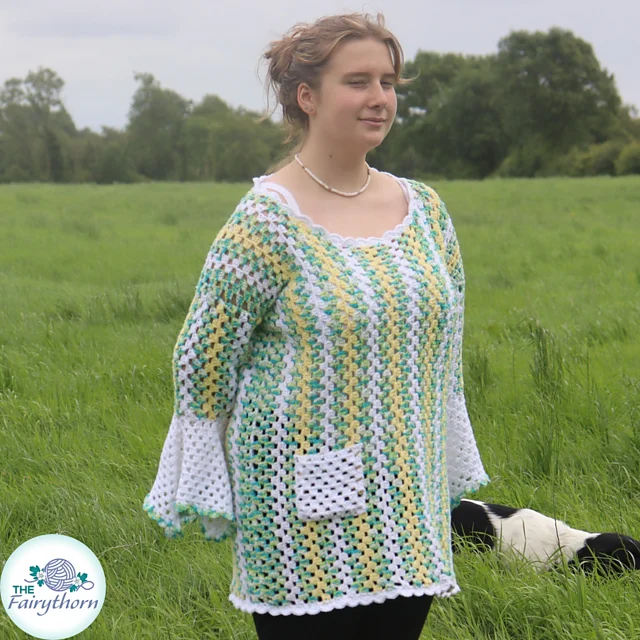
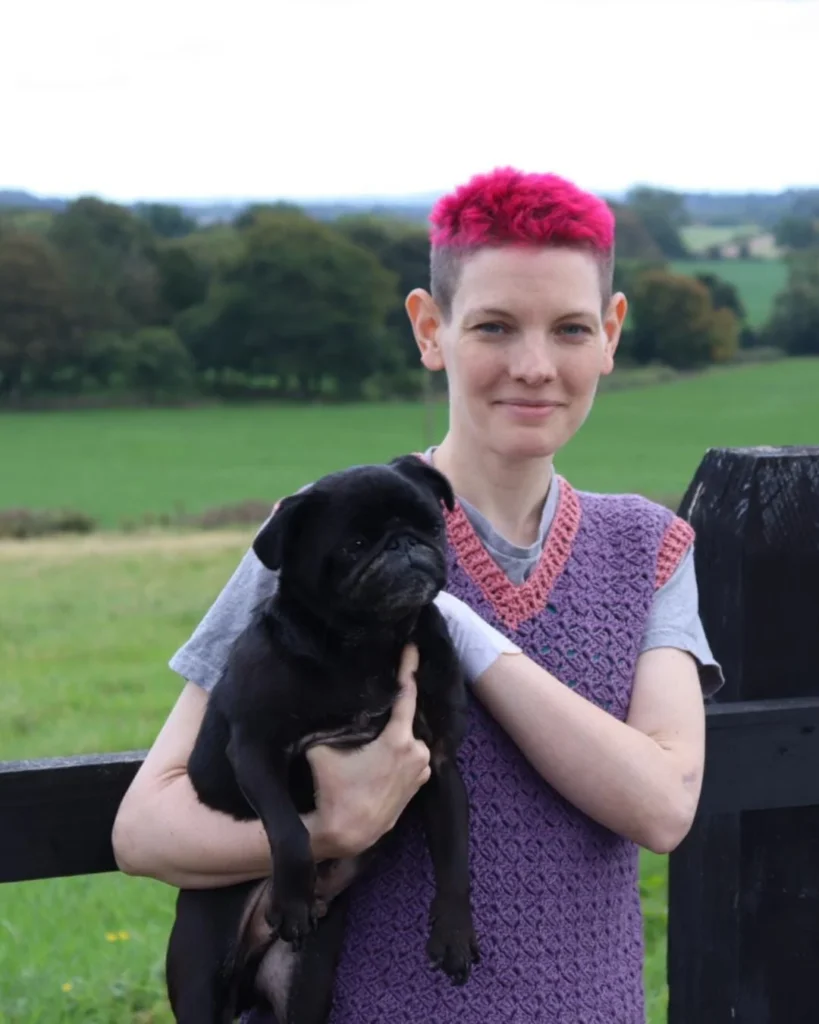

[Pictured: Taylor Swift-inspired ’60s Dress, Breeze Over Greenore, Enniskerry Garden]
Question 4: How Do I Keep a Pattern Test on Track?
This is another area that has gone wrong for me in the past. When I had testers talking to me on different platforms, I missed crucial feedback they had given. When running a test, it is important to have routine and structure: When do you respond to tester queries? When do you apply tester feedback to your pattern?
I’m not sure how universal this is, but I’ve read that one marked difference between neurodivergent people and neurotypical people is that neurotypical people tend to have an easier time developing habits, while neurodivergent people rely more heavily on routine. And, ironically, many of us neurodivergent people hate routine. Myself included! But I have learned the hard way that for me, without strict routines, everything falls apart. And by that I mean a pattern test will fall apart faster than any other aspect of my business. But I do think a solid routine can help any designer, not just a neurospicy one.
I work with both a daily routine and a weekly one. The daily routine involves checking messages at the start and end of each work day. This goes for all messages, but includes checking my tests while a test is running. So, the tester who is stuck or needs a response should not wait more than half a day.
For my weekly routine, my workdays each have a theme: Monday, GPSR (General Product Safety Regulation, here in the EU). Tuesday, social media scheduling. Wednesday and Thursday, pattern writing. Friday, blog post writing and website work.
Managing a pattern test, if one is active, happens on Wednesdays—for as much of the day as needed. I take an overview of all the feedback up to that point, and if needed, edit the pattern. If I edit the pattern, I prompt testers to refresh their Google Docs link.
Doing things weekly this way has two effects: It saves overwhelm at the end of the test, going through all the changes at once. And, it seems to encourage testers, too. They like seeing their feedback applied, and it seems to motivate them to continue with the knitting or crochet and get to the next section.
Final Thoughts: Be Intentional—and Be Kind
In summary, testing a pattern requires a high level of organization, and can at times be quite stressful. Pattern testing helps with both quality control and social proof, but we do have alternatives: We can hire tech editors, we can hire sample makers, we can become masters of Pinterest, etc. These alternatives cost money, and may require even more time commitment. So, as you develop your business, you will likely still need to run some pattern tests. It’s best to do so with intention, knowing why you are doing it and what you will get from the process.
To get the most from a test, it’s important to have routine and structures in place, and keep everything together.
And always be nice to testers! They are working as volunteers so your business can thrive. Remember that testers will come with different levels of experience. Some may be newer makers who are still building confidence. Some may describe themselves as “experienced,” when they’ve only just learned to crochet and have only made three granny squares. They may misread pattern instructions or lack the know-how to do certain stitches. They might then tell you that it must be because your pattern is “wrong.” Patience, my young Padawan! Testers are simply showing you what your customer experiences, and that information is invaluable.
If you are structured and intentional about running pattern tests, you will learn so much about becoming a great designer from that insight.