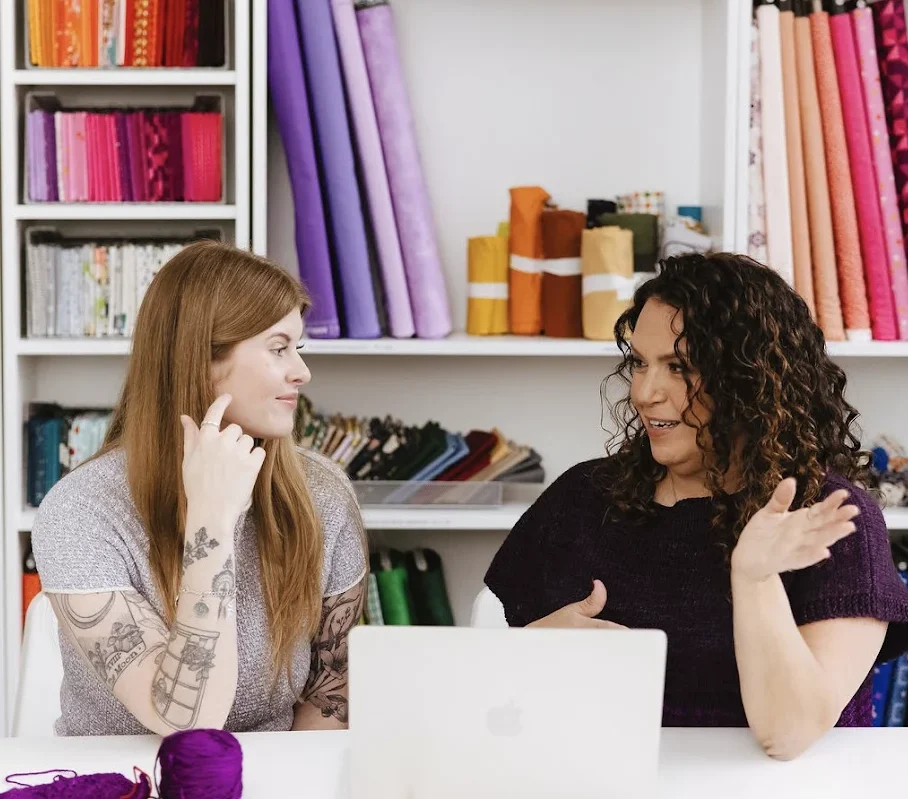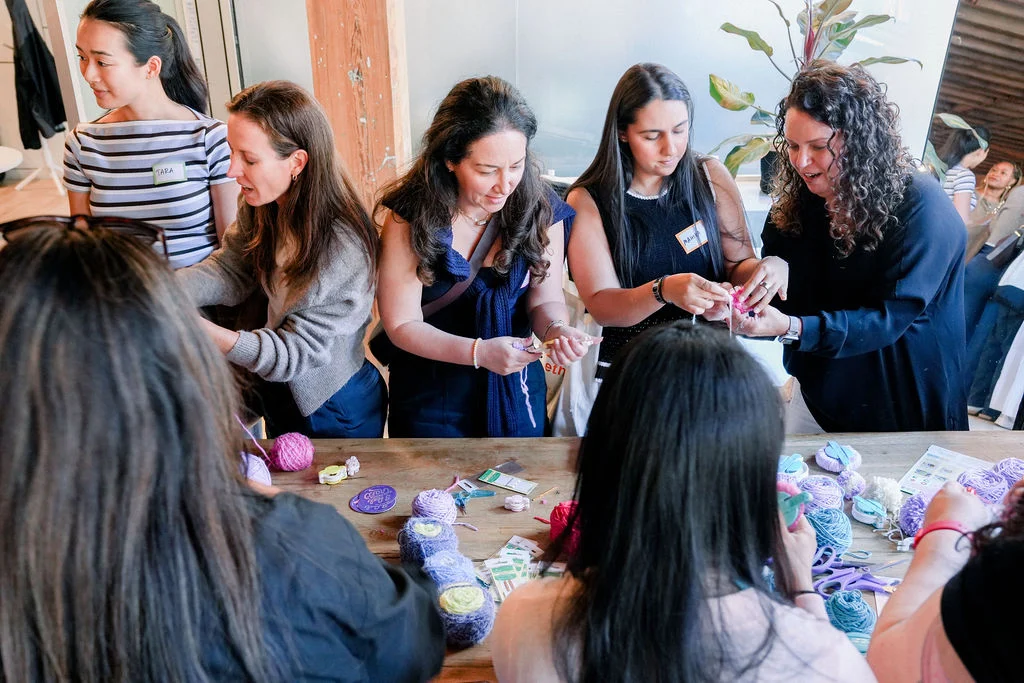


As pattern designers, we spend a lot of time working solo without real-time feedback or support. It’s part of the job, but it can also be isolating.
Collaborations offer something you can’t create alone: the magic that happens when creative minds combine their strengths, support each other’s growth, and build something bigger together. But making the shift from solo to collaborative thinking can feel challenging when you’re used to controlling every aspect of your design process.
“I spend lots of time alone with my yarn, laptop and notebook,” says Michele Costa, GoSadi co-founder and knitwear designer. “In order for a collaborative project to be successful we have to get out of our solo working mindset and into a collaborative mindset.”
Today we’ll explore how to find the right collaborators, structure projects that benefit everyone involved, and navigate the unique challenges that come with collaborative creative work.
What Collaboration Actually Means
Before diving into how to collaborate, let’s clarify what collaboration is and what it isn’t.
Collaboration is NOT:
- A work for hire arrangement
- A commission where you’re executing someone else’s vision
- An assignment with predetermined outcomes
True collaboration is the action of working with someone to produce or create something that benefits all involved. Everyone contributes their strengths, shares responsibility for results, and gains value from the partnership.
This distinction matters because it sets the foundation for how you approach the relationship. In a work-for-hire situation, one person directs and the other executes. In collaboration, you’re building something together as equals, each bringing unique skills and perspectives to create something neither could accomplish alone.
Why Collaborate? The Benefits Beyond the Project
Collaborations offer benefits that extend far beyond the immediate project.
Support and Encouragement
Collaborations create opportunities to support each other, lift each other up, and push each other to be your best. When you’re working alone, it’s easy to settle for “good enough” or let imposter syndrome convince you not to try something new. A collaborator who believes in your skills and vision can be the encouragement you need to reach higher.
This support system becomes especially valuable during challenging phases of a project. When technical problems arise or creative blocks hit, having someone else invested in the outcome means you’re not figuring it out alone.
Shine in Your Element
Collaborations take the best each member has to offer, and by bringing that together, each person is amplified. You get to focus on what you do brilliantly while your collaborator handles aspects that aren’t your strength.
Maybe you’re incredible at colorwork design but struggle with photography. Your collaborator might be a photographer who is a visual storytelling genius but who doesn’t have the technical skills to create a sample or pattern. Together, you create something more polished and professional than either could produce solo.
Each collaborator benefits and grows through the partnership, learning from each other’s expertise while contributing their own.
Grow Your Audience
Collaborations create opportunities for cross-promotion and exposure to different audiences. When you partner with another designer or a yarn dyer, you’re introduced to their community and they’re introduced to yours.
This audience growth happens organically because people who love your collaborator’s work are likely to appreciate yours too. It’s authentic exposure to genuinely interested potential customers rather than shouting into the void hoping someone notices.
Make Some Money (This Is a Business After All!)
Let’s be direct: collaborations can be profitable. When two designers’ audiences combine, sales potential increases significantly. A well-executed collaboration often outsells what either party would achieve individually during the same timeframe.
Michele Costa’s collaborative projects with Asylum Fibers demonstrate this growth potential beautifully. Her “Unicorns, Dragons & Butterflies” collaboration series grew from 100 units sold in the first year to 160 in the second year, and 205 in the third year. That’s not just maintained momentum, it’s building on success year after year.
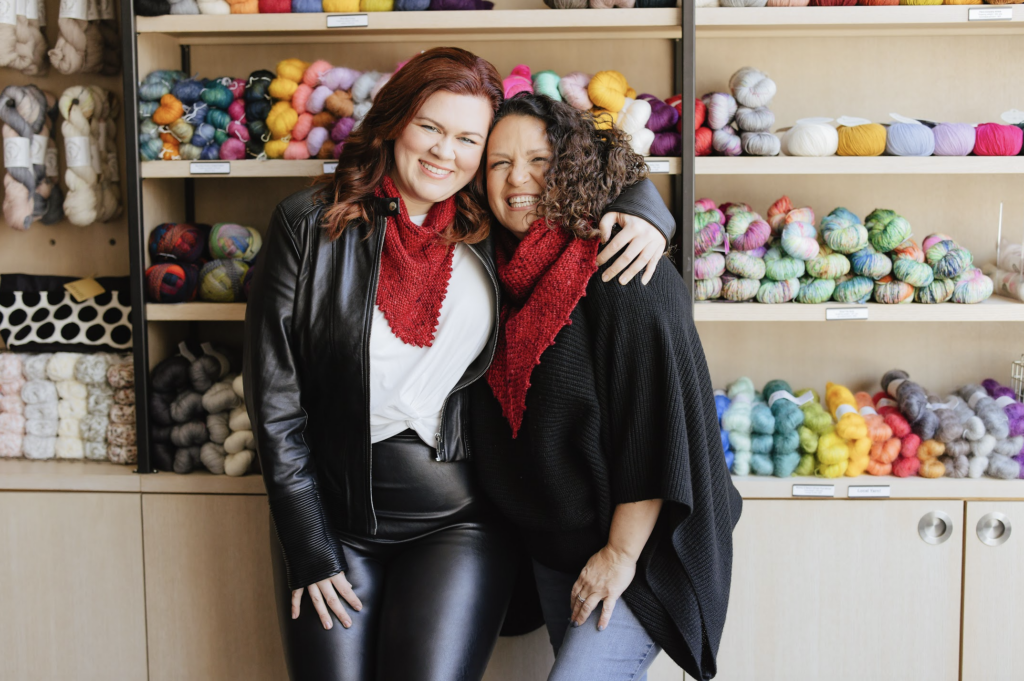
The Collaborative Mindset: Perspective Is Everything
Remember: collaborations are not contract work, meaning one person hiring or paying the other for services. Each member is a contributor for their part and has shared responsibility for results. This fundamental mindset shift is essential for collaboration success.
Key Principles of the Collaborative Mindset:
Respect What Each Collaborator Brings to the Table
Everyone’s contribution has value, even if it looks different from yours. The yarn dyer’s color expertise matters as much as the designer’s construction knowledge. The photographer’s visual storytelling is as crucial as the pattern writer’s clear instructions.
Avoid the trap of thinking your contribution is more important or more difficult than the other. Different doesn’t mean lesser.
Be Responsible for What You Bring to the Project
Don’t wait for others to pick up your slack or fill in gaps you should have handled. If you committed to delivering pattern instructions by a certain date, deliver them. If you said you’d promote the collaboration to your audience, actually do it.
Your reliability directly impacts everyone else’s success.
Project Goals Always Come Ahead of Personal Goals
This might be the hardest principle to maintain. When you’re running a business, you naturally prioritize your own brand growth, sales, and recognition. In collaboration, the project’s success must be the primary goal.
If a decision benefits the collaboration but doesn’t put your brand front and center, you make that decision anyway. The collaboration’s success will benefit you. Prioritizing personal gain over collaborative goals damages trust and sabotages the project.
Find and Build Your Collaboration Team
The fiber arts community offers incredible collaboration possibilities. Potential collaborators include:
- Designers (knit, crochet, Tunisian crochet, weaving)
- Dyers
- Spinners
- Photographers
- Bag makers
- Notions makers
- Graphic artists
The key is finding collaborators whose skills complement yours and whose vision aligns with your aesthetic.
Things to Think About When Building Your Collab Team
Before reaching out to potential collaborators, clarify your own goals and ask yourself the following questions.
About Your Goals:
- What is your goal from this collaboration?
- What investment can you make to this collaboration (time, money, materials)?
- How will we cross-promote the work to each of our audiences?
- What works best for you for project flow?
- What is the timeline of this project?
About Potential Collaborators:
- Do our values align?
- Do our audiences overlap or is this a balanced growth opportunity?
- Do our creative aesthetics complement each other?
- What value can I add to their community and customer base?
- What value can they add to my community and customer base?
These questions help you identify collaborators who’ll create genuine partnerships rather than mismatched arrangements where one person does all the work or benefits disproportionately.
How to Reach Out to Build Your Collab Team
Once you’ve identified potential collaborators, reach out professionally and clearly. Methods include:
- Email or website contact form
- Comments on social media posts
- Direct messages
- Mutual introduction through a shared connection
Regardless of method, your outreach should include:
1. Introduce yourself: Briefly share who you are and what you do and why you’re a good fit for them/their audience.
2. Describe the project: Give them a clear picture of what you’re proposing and what benefits they’ll gain from participating.
3. Layout the expectation or “ask”: Be specific about what you’d like them to contribute.
4. Include proposed timeline if you can: Help them understand the time commitment.
Don’t be vague hoping they’ll fill in blanks. The clearer your proposal, the easier it is for them to say yes (or no, which saves everyone time if it’s not a fit).
Manage Expectations and Deliverables
Once everyone agrees to collaborate, get everything in writing. Working with friends is fun, but this is still business.
Outline for the Project:
Create a written agreement covering:
- Each person’s role and responsibilities: Who’s doing what, specifically?
- Timeline and deadlines: When is each phase due? When’s the launch?
- Each contributor’s investment: Who’s covering which costs?
- How costs will be handled: Shipping, materials, software subscriptions, etc.
- What happens if the collab is cancelled or does not go through: Have an exit plan before you need one.
This documentation protects everyone and prevents misunderstandings that could damage both the project and the relationship.
Flexibility Within Structure
Michele’s collaboration with 7th Floor Yarns for the Eastbound Shawls collection demonstrates that collaboration terms can be flexible. The project was actually a hybrid of work for hire and collaboration in how it was structured, but they maintained a collaborative approach throughout.
Remember, you can make the collab terms whatever works for you. The important part is that everyone understands and agrees to those terms upfront.
Key to Collaboration Success: Communication
Even well-planned collaborations hit bumps. Clear communication is essential for navigating challenges successfully.
It is inevitable that there will be bumps. We are creative people who normally work solo, so communication is essential for success. When issues arise (and they will), address them directly rather than letting resentment build.
Successful collaborations require constant, clear communication. Here’s what that looks like in practice:
- Compromise is the key: You won’t get everything your way. Neither will your collaborator. Find a middle ground that serves the project.
- Team respect: Treat collaborators as equals regardless of follower counts, years in business, or any other metric.
- Keep promises: If you say you’ll do something, do it. Reliability builds trust.
- Consider requests: When collaborators ask for changes or accommodations, genuinely consider them rather than dismissing ideas that aren’t yours.
- Knowledge sharing for a common goal: Share your expertise freely. The collaboration succeeds when everyone performs at their best.
- Timelines matter: Deadlines aren’t suggestions. Missing your deadline impacts everyone’s schedule.
- Reliability is key: Show up consistently throughout the project, not just when it’s convenient.
It is essential for collabs to thrive that we TALK about it, keep the collaborative goal the focus. When disagreements happen, bring the conversation back to what serves the project best. Personal feelings matter, but the shared goal matters more.
While collaborations are fun, it is still a BUSINESS. Treat it with the professionalism any business relationship deserves. Meet deadlines, honor commitments, and communicate promptly.
Collaboration vs. Yarn Company Partnerships
Collaborations with other designers differ from partnerships with yarn companies, though both offer value. When considering yarn company work, ask yourself whether it’s truly a collaboration (mutual benefit and shared creative direction) or work for hire (they provide creative direction and compensation).
Both arrangements can be valuable, but understanding the distinction helps you negotiate appropriate terms and set realistic expectations.
For more on yarn company partnerships, check out our guides:
- Working With Yarn Companies Part 1: How to Choose Which Yarn Partnerships Are Right for YOU
- Working With Yarn Companies Part 2: Pitches That Close
Get Out of Your Solo Mindset
The shift from solo to collaborative thinking takes practice. You’re used to making all decisions, setting all timelines, and controlling all outcomes. Collaboration requires sharing that control and trusting others to contribute their part excellently.
But success is more fun with friends. Find your collaborators, structure projects that benefit everyone involved, communicate constantly and clearly, and watch what you can build together.
The fiber arts community thrives on connection and mutual support. Your next collaboration might be the project that takes your design business to the next level while forming relationships that support your creative work for years to come.