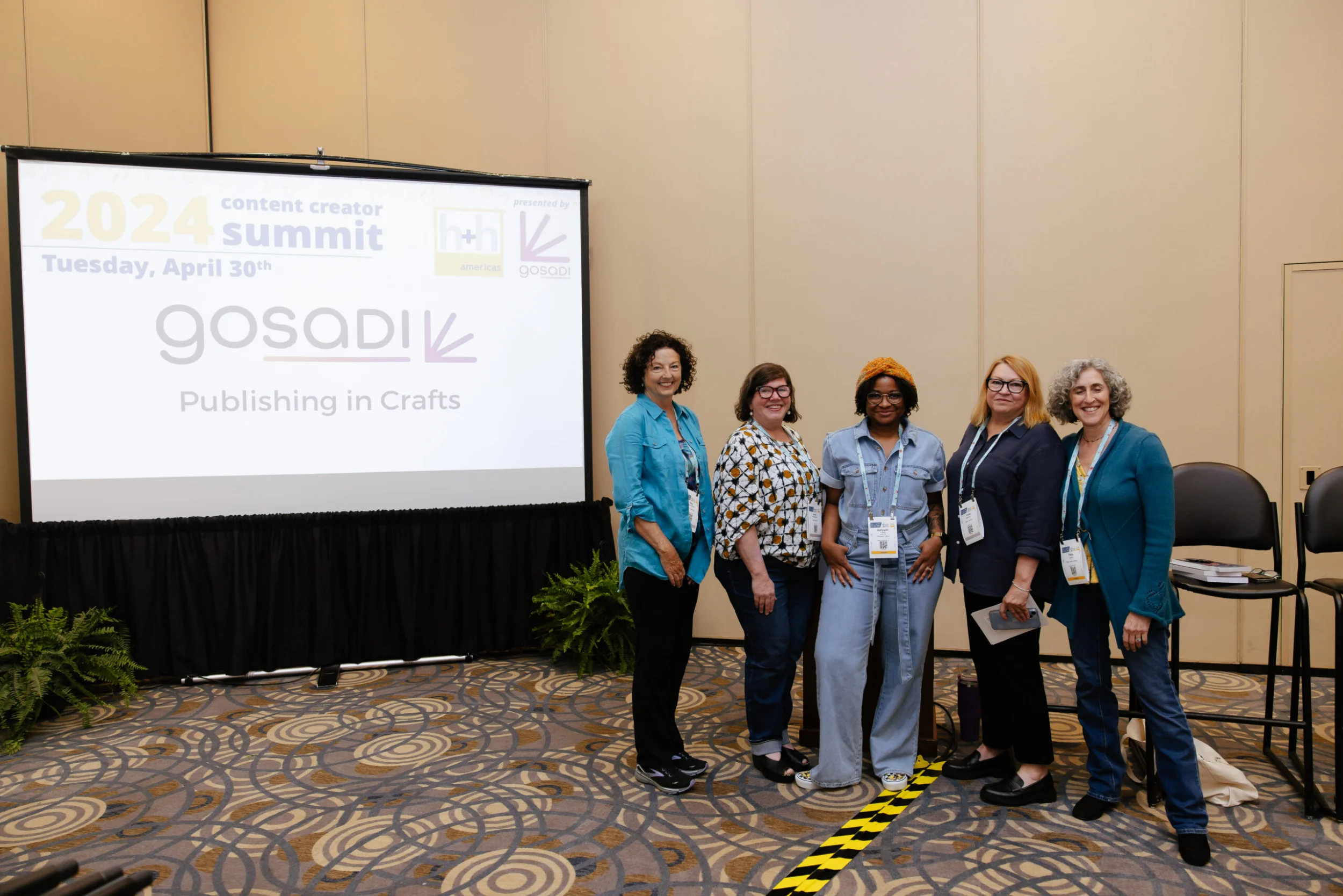


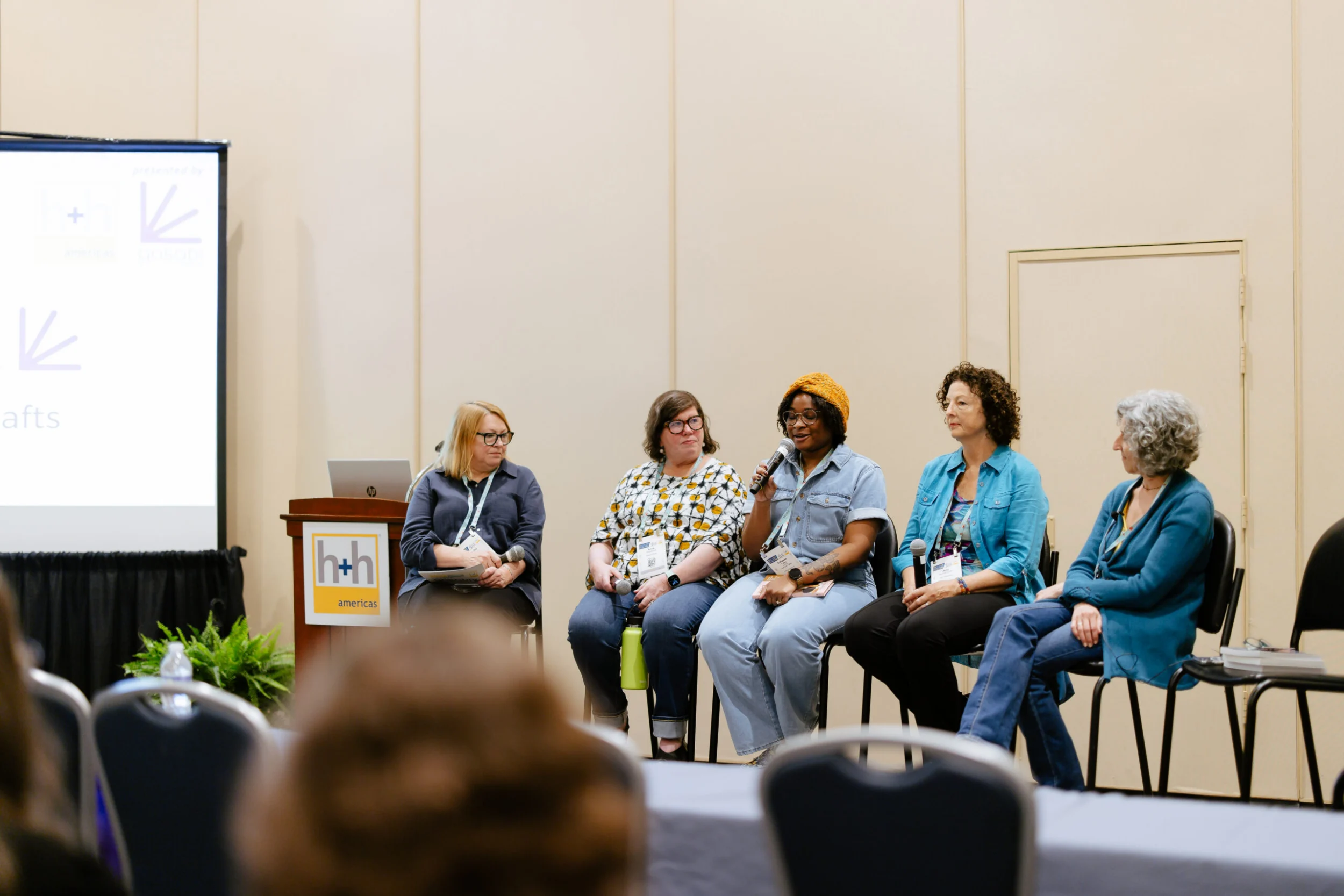
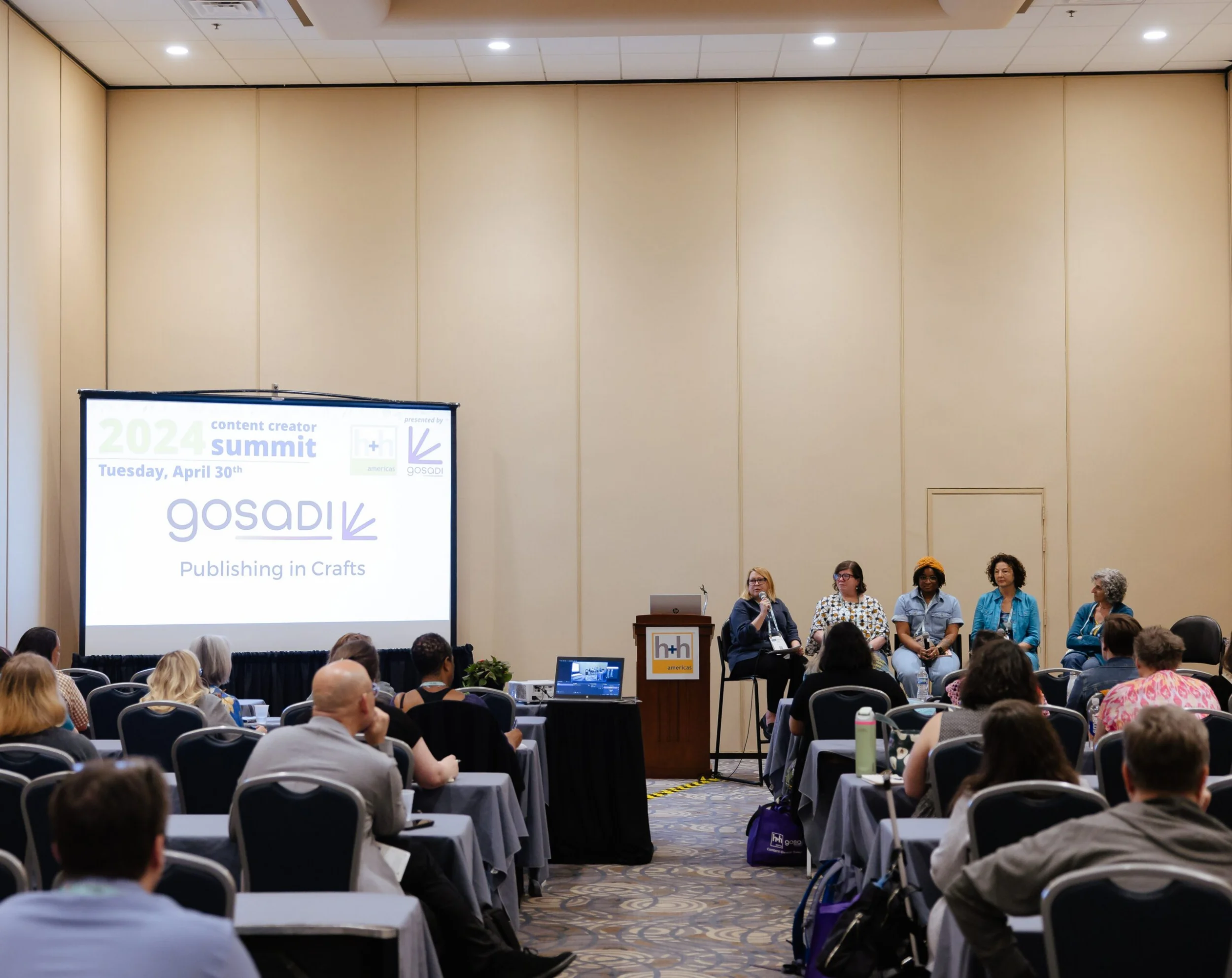
The world of craft publishing and knitting pattern publishing is ever-evolving! This year at h+h Americas, we had the privilege of discussing the process of publishing knitting patterns with some of the industry’s top leaders. We asked tough questions and gained invaluable insights from our panel, which included moderator Trisha Malcolm, author Patty Lyons, designer Safiyyah Talley, and publishers Amy Barrett-Daffin and Anne Woodcock.
Here are five key lessons we gained from their expertise. Whether you’re just starting to design your first knitting pattern or looking to improve your publishing strategy, these insights will help guide you through the complex and often winding road of craft and knitting pattern publishing.
Step-by-Step Guide to Publishing Your First Knitting Pattern
Publishing your first knitting pattern can feel overwhelming, but breaking the process down into steps makes it easier. Start by gathering inspiration and choosing a design idea that feels approachable. For your first pattern, consider creating a one-size project like a shawl, wrap, or scarf to simplify grading. From there:
- Select yarns you’re familiar with and that photograph well.
- Create swatches and knit a sample to test your design.
- Write your pattern using clear, standardized pattern instructions, including gauge, sizing, and notes.
- Share your draft with a trusted editor or peer for early feedback.
This approach ensures your first pattern launch builds confidence and credibility while avoiding common beginner pitfalls.
1. Build Strong Yarn and Craft Community Relationships
Anne Woodcock, Marketing and Publicity Director for Search Press North America, emphasized the importance of leveraging existing relationships within the yarn and knitting pattern publishing community. For new authors, these connections can be a significant asset when trying to publish and promote your knitting pattern.
Are you collaborating with yarn companies to promote their products? How strong is your presence in knitting or crochet clubs and associations? Working closely with these communities not only builds trust but also opens doors for yarn support, cross-promotion, and valuable feedback on your design ideas.
These relationships can be amplified to extend the reach of your book or pattern, turning your network into a supportive audience eager to champion your work.
2. Become an Expert in Knitting Pattern Publishing
While the market for knitting and crochet pattern-specific books might be rocky, knitting technique and design books are still in high demand. Safiyyah Talley, known as The Drunk Knitter, illustrated this perfectly with her book Knit 2 Socks in 1, which combined unique techniques with detailed pattern instructions and sample projects.
By focusing on a specific process or technique, rather than just on patterns, she positioned herself as an expert, making her book an essential resource for knitters. This type of specialization not only helps your knitting pattern or book stand out but also solidifies your reputation in the craft and publishing community. This expertise often leads to more speaking engagements, course collaborations, and partnerships that can increase visibility and book or pattern sales.
3. Trust Your Voice and Know Your Knitting Pattern Market
Patty Lyons shared a crucial lesson from her own experience: the importance of trusting your voice and understanding your target audience in the knitting pattern publishing space. While it’s essential to rely on your editor’s expertise, it’s equally vital to push back when suggestions don’t align with your vision—especially when it comes to how you want your designs, instructions, and overall pattern process to be presented.
Knowing your audience allows you to advocate for ideas that will resonate with them. Patty Lyons highlighted that finding the confidence to assert her perspective ultimately led to a more successful final product. Once she learned not only how to advocate for her vision but also the language needed to clearly explain her pattern design process and goals, she was able to create a final product that she could be proud of.
4. Marketing Matters: What to Do After Publishing Your Knitting Pattern
Amy Barrett-Daffin from C&T Publishing & Creative Spark Online Learning reminded us that publishing a book is just the beginning. The real work begins post-publication with marketing efforts.
New authors should be prepared for an extensive marketing campaign, post release, to ensure their book’s success. Amy stressed the importance of understanding these commitments upfront. C&T Publishing provides ample resources and training to help authors navigate this crucial phase, ensuring they are equipped to promote their book effectively.
Safiyyah Talley put it best. She shared that if releasing a book is like having a baby, then after the release, you have to raise the child! As the author, it’s your responsibility to make sure your book is successful years after it’s released.
5. Boost Your Pattern Launch by Collaborating with Local Yarn Shops
Local Yarn Stores can play a pivotal role in the success of your book. Patty Lyons, who has previously shared her insights on working with LYSs, honed in on how important this is during the panel.
For her book release, Patty Lyons Knitting Bag of Tricks, she crafted a strategic campaign for her book launch, offering incentives to LYSs based on the number of copies they ordered. These ranged from filming Instagram reels for shops to providing free Zoom classes.
Such initiatives not only boost sales but also create a buzz within the LYS community, encouraging them to promote your book enthusiastically.
Think Beyond the Basics: Creative Approaches to Publishing Success
If there’s one overarching lesson from the Publishing in Crafts panel, it’s that creativity is key. The book publishing landscape is constantly shifting, but with out-of-the-box thinking and strategic planning, new authors can navigate these changes successfully and give your book a competitive edge.
Publishing Knitting Patterns FAQs
What is the best platform to sell knitting patterns online?
Platforms like Ravelry, Etsy, and Payhip are popular for independent designers. They offer built-in audiences and tools to manage your sales and pattern updates.
How do I price my knitting patterns?
Consider factors like pattern complexity, market averages, and your time investment. Many designers start with $5–$8 for simple patterns and scale up for more detailed or multi-size designs.
Do I need a tech editor for my knitting pattern?
While not required, a tech editor ensures your instructions are clear, consistent, and error-free—helping you build trust with your audience and avoid costly mistakes.
How can I build an audience before publishing my first pattern?
Use Instagram, TikTok, or a blog to share your knitting journey, progress photos, and design ideas. This helps create anticipation and a ready audience for your launch.
What mistakes should I avoid when publishing my first knitting pattern?
Common pitfalls include skipping test knitting, unclear instructions, poor photography, and underestimating marketing. Addressing these early sets you up for a more successful launch.