

The options for where you can sell your patterns online are endless! New selling channels pop up every day, and it can feel like there needs to be more hours in the day to keep up. You can sell on marketplaces like Ravelry, Ribblr, and Etsy, or use a platform like Squarespace, Shopify, or WooCommerce to sell patterns through a stand-alone e-commerce store. So, how do you know which option is right for you? The quick and short answer is that BOTH are part of a versatile business model, and we are here to help you navigate it all. Let’s dive into the differences between marketplaces and platforms and help you decide which model is best for your business.
marketplaces vs. platforms
What is an eCommerce Marketplace?
Let’s start at the beginning. A marketplace is a platform where sellers can list their products, and buyers can purchase items from multiple sellers all in one place. Think of a marketplace as an online version of a craft fair where multiple sellers have booths, but the sellers aren’t responsible for anything outside of their booth. Some of the most popular marketplaces include Ravelry, LoveCrafts, and Etsy.
Marketplaces are primarily focused on facilitating transactions between buyers and sellers. Their main purpose is to enable commerce by connecting supply with demand. The interaction is largely transactional, and the value they create comes from making these exchanges efficient and accessible. Marketplaces typically generate revenue through transaction-based fees or commissions on sales.
What is an eCommerce Platform?
On the other hand, a platform is a stand-alone e-commerce store where sellers create the look of the store, list their products, and only items provided by the seller are sold on the platform. In this case, you are the owner of the store. Examples of popular selling platforms include Squarespace, Shopify, and WooCommerce.
Platforms support a broader range of interactions beyond just transactions, such as content sharing, communication, and networking. They create value by enabling users to interact in diverse ways, allowing for the exchange of information, services, or community engagement. While they may earn revenue from transactions, platforms often rely on multiple income streams, including advertising, subscriptions, or in-app purchases.
benefits of using a marketplace over a selling platform
- Built-In Shopper Audience: The strongest advantage of marketplaces is that they have a large audience of buyers coming there to shop. Many of whom don’t yet have a clear idea of what they want to buy and who they want to buy from. They are looking for that “perfect find”. This is an incredible opportunity and means that you are more likely to find new customers for your products on a marketplace than on a platform.
- Marketplace Marketing Works for You: Marketplaces do their own marketing. Think of all the Etsy commercials you see. Their marketing benefits you by bringing customers to the marketplace who can discover you and your products. Customers that you may never have reached otherwise.
- Exposure Through Shared Search Results: Think about how you use a marketplace like Ravelry. Chances are you’ll go to Ravelry, search for an item you want to make, and see a list of patterns that fit the search from a wide range of designers. However, if you search on a platform, you will only find the results belonging to the owner of the website. Customers on a marketplace can discover you even if they came to the marketplace for something else!
- Trust Through Name Recognition: There is also name-brand recognition in the marketplace. Think of how much more comfortable you feel shopping at a site you know to be reputable. Many customers will be at ease using sites they are familiar with and that have built-in customer protections.
- Lower Cost and Easier Entry: Additionally, marketplaces usually have lower fees than selling platforms. You may have to pay to list the individual patterns or a percentage of sales, but when you use a selling platform, you’ll have to pay to host the website and do all the labor to maintain it. If you’re starting out and only have a handful of products, a marketplace will let you test the waters and build your customer base while saving you from taking on a few extra expenses.
benefits of using a selling platform vs. a marketplace
- Lower Long-Term Costs: In the long run, platforms are much cheaper to use than marketplaces. Especially once you get the hang of maintaining your own site, and your labor/overhead goes down. When you have an extensive range of patterns & products, being able to pay one monthly/yearly fee vs. paying listing fees and sales percentages for each design and sale can add up to lots of savings and more money in your pocket! Depending on what you use for payment processing on your platform, you will typically have lower transaction fees, saving you a lot of money at the end of the day.
- Stronger Brand Control: As to branding, a huge benefit to platforms is that they offer more customization options and services than marketplaces. You can completely customize your store’s design, layout, and features with a platform. This allows you to create a store that perfectly matches your brand and helps you develop brand recognition with your customers.
- More Powerful Marketing Tools: Finally, platforms offer more marketing tools than marketplaces. Most platforms provide sellers with add-ons and tools like email marketing, SEO optimization, and social media integration, which can help you connect with your buyers and ultimately sell more products.
choosing the right platform or marketplace selling channel for you
When choosing a selling channel for your online business, there are a few things to keep in mind to get started on the right foot.
Evaluate Your Readiness And Resources
The first step in choosing the right selling channel for your business is to decide what type of business you have…and be super honest with yourself about where you are with your business. There’s no need to rush the process. Think about the amount of time you have to invest in building a platform and your brand. Canceling a marketplace is a much easier and cheaper process than canceling a platform. So you’ll want to do an honest assessment of where you are, where you want to go, and what time and resources you can invest in your online presence and store.
If you are uncertain, you can test out a few marketplaces to see what your traffic is looking like. Try sending your social media audience and newsletter to a specific product to see how solid your direct traffic is. This will give you a realistic indication of what traffic is coming to you from your own efforts vs. what the marketplace is bringing you. Once you move to a platform, sales are all on you. But if you set yourself up for success, you can do it!
Know Your Audience and Marketplace Fit
The second step in choosing the right marketplace for your business is to decide who your target customer is and where they are likely to discover you. Look at designers who are actively using the marketplace. Who are their audiences, and would that same buyer be interested in your patterns & products? Or is the marketplace flooded with designs that look like the ones you create? Can you find a way to stand out and get noticed?
These things should be factored in when looking for the right fit for your patterns & products.
Decide How Much Control You Want
The third step in choosing the right selling channel for your business is to decide how much control you want over your store’s design and features. If you want complete control over your store’s design and branding, such as font, logo placement, and product description, then a platform is the option for you. If you are happy with the design and features that the marketplace offers, then you could wait to add a platform.
so what’s your final verdict and why we say BOTH platform AND marketplace are the best approach
The truth is, it really isn’t an either or situation. Many successful designers sell on both marketplaces and use a platform for their stand alone store. This allows you to have the best of both worlds and as you gain more customers and grow, you can direct them to your branded site.
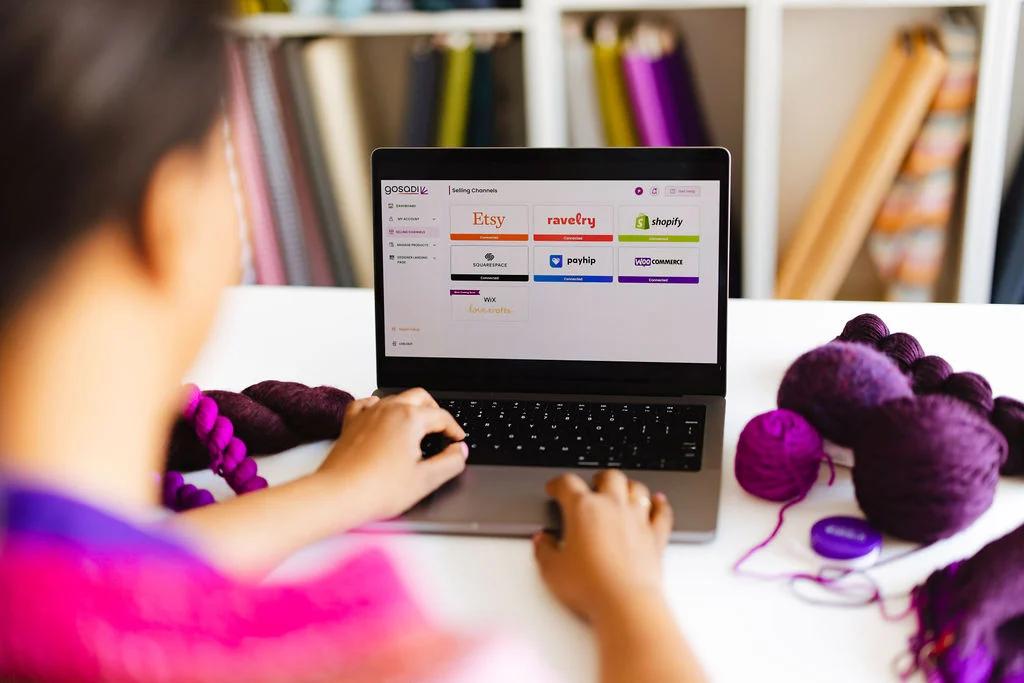
One of the things we are super excited about with gosadi is that you will soon be able to choose all of the above without worrying about the time that setting up each individual listing will take. With gosadi, you’ll be able to upload your patterns once, and then with a few clicks, you can send them to your selling platform and any marketplaces you might want to test out! Make sure you are signed up to receive our newsletter to become the first to know when we are ready to launch.
When choosing a selling channel for your online business, it is essential to keep in mind who you’re selling to, what you are selling, and how your budget will be best spent. These decisions can be a lot and it’s easy to put your cart before the horse. But take your time. You’ve got this!