

The platform you choose to sell your knitting patterns on directly impacts who discovers your work, how much you earn per sale, and how much time you spend managing your pattern business.
There’s no single “best” platform for every designer. Your ideal selling strategy depends on your goals, your audience, and how you want to run your business. Some designers thrive on a single platform, while others find success selling through multiple channels simultaneously.
In this guide, we’ll explore the top platforms where knitting designers succeed, helping you make informed decisions about where to invest your time and energy.
Factors to Consider When Choosing a Platform
Choosing where to sell your knitting patterns isn’t just about fees. It’s about finding platforms that align with your business goals and working style.
Fee Structures and Profit Margins
Different platforms take different cuts of your sales. Ravelry’s zero commission maximizes profit per sale, while Etsy’s multiple fee layers and LoveCrafts’ percentage-based fees can significantly impact your earnings, especially on lower-priced patterns.
Calculate your actual take-home amount on each platform. A $6 pattern on Ravelry nets you approximately $5.70 after payment processing. The same pattern on Etsy might net you around $5.10 after all fees. On LoveCrafts with the 25% seller fee, you’d receive approximately $4.20. These differences compound across hundreds of sales.
Ease of Use and Time Investment
Some platforms are quick to set up but require constant maintenance. Others have steeper learning curves but save time in the long run. Consider how much time you’re willing to spend managing each platform.
Etsy requires regular SEO optimization and often paid advertising to maintain visibility. Ravelry needs community engagement and external traffic driving. Your own website demands technical maintenance and all your own marketing.
Using GoSadi reduces time spent on administrative tasks across multiple channels.
Built-In Audience vs. Marketing Control
Marketplaces like Etsy and LoveCrafts provide existing traffic, which helps new designers make their first sales. However, you’re competing with thousands of other designers for that attention, and the platform controls how customers discover you.
Your own website and Ravelry require you to drive your own traffic, but you control how customers find and experience your brand. This takes more upfront effort but builds a more sustainable business long-term.
Customer Relationship Ownership
Who owns the customer relationship matters more than many designers realize. On marketplaces, the platform owns that relationship. You can’t email customers directly about new releases or build ongoing connections.
When you sell through your own website or collect email addresses through your marketing efforts, you can nurture those relationships directly. This turns one-time customers into loyal fans who eagerly await your next pattern release.
Designer Patty Lyons does a great job of driving traffic to her newsletter on her GoSadi Designer Landing Page.
Technical Requirements and Support
Consider your comfort level with technology. Etsy and Ravelry handle most technical aspects for you. Your own website requires more technical knowledge or budget for professional help. GoSadi simplifies the technical complexity of managing multiple platforms simultaneously.
Look at what support each platform offers. When something goes wrong, how quickly can you get help? What resources are available for troubleshooting?
For More Insights
Want to understand the strategic differences between marketplaces and platforms? Read more: Marketplaces vs Platforms: Which Is Right for Your Business?
GoSadi designer Snickerdoodle Knits also offers a helpful overview of platform options worth reviewing.
Popular Platforms for Selling Knitting Patterns
GoSadi
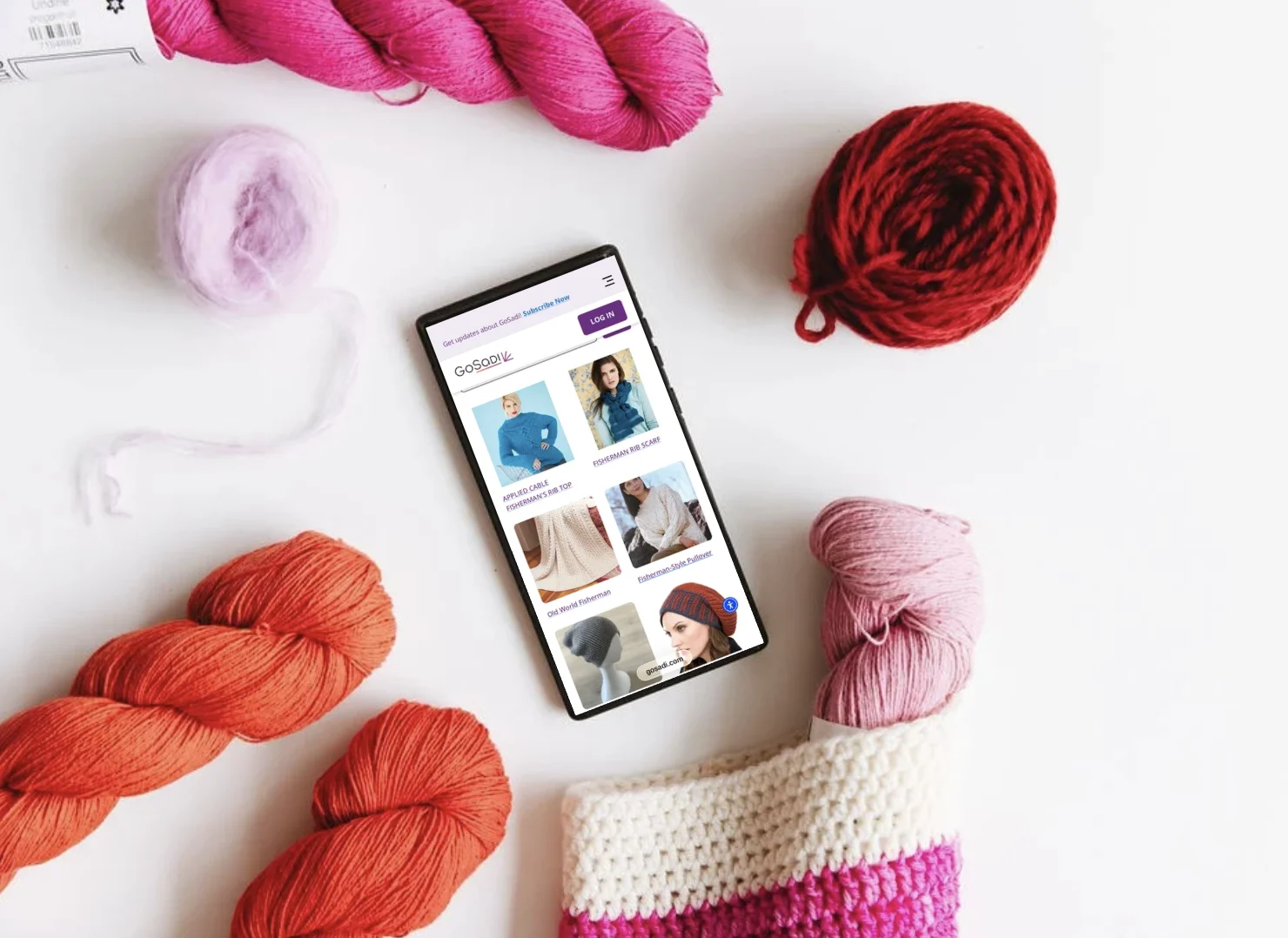
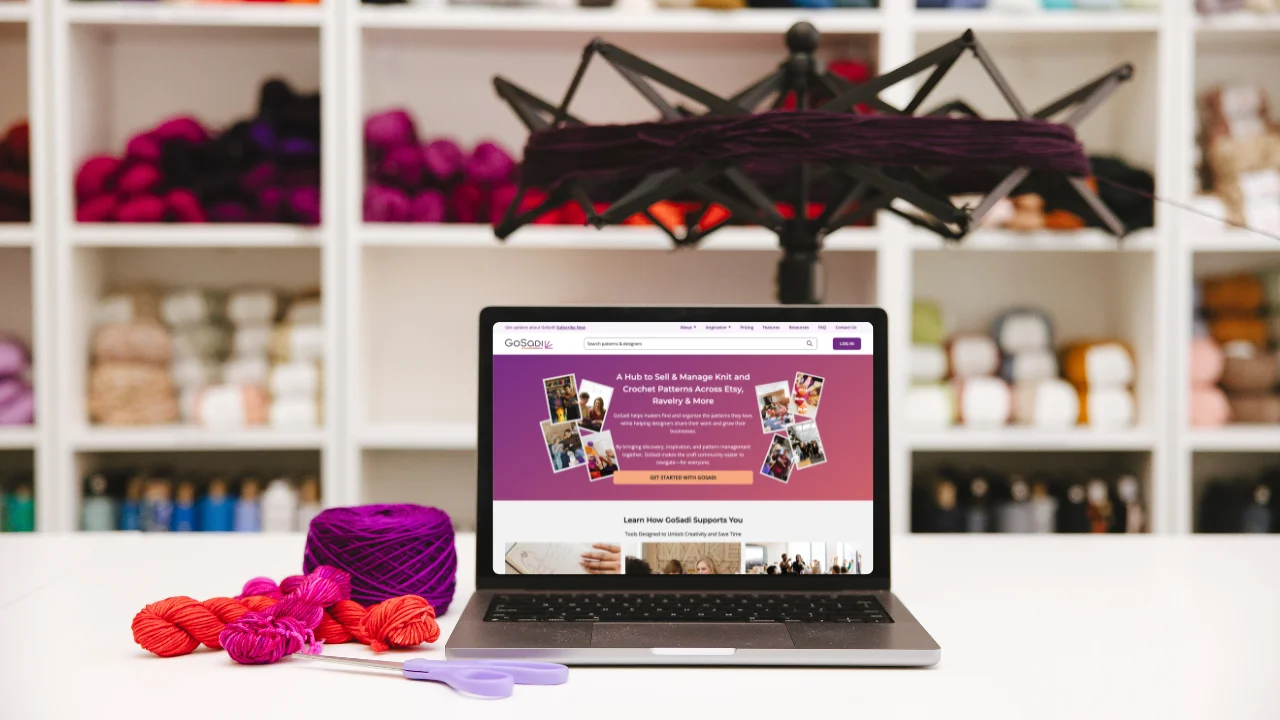
GoSadi takes a fundamentally different approach than traditional selling platforms. Instead of being another marketplace where you list patterns, GoSadi is a centralized hub that connects all the places you already sell.
What Makes GoSadi Different
The platform’s Designer Landing Pages (DLPs) solve a frustrating problem: customers want to buy from different places. Some prefer Etsy’s familiar checkout, others love Ravelry’s pattern library, and many want to support designers directly through their websites. Instead of forcing customers into one channel, your GoSadi DLP links to everywhere you sell that pattern.
This means knitters can choose their preferred shopping experience while you maintain a professional, unified presence. You’re not limiting your audience, you’re expanding it by meeting customers where they’re comfortable.
Time-Saving Automation
GoSadi automates the tedious work of updating pattern information across multiple platforms. When you need to change a price, update a description, or add a new photo, you update it once in GoSadi instead of logging into four different sites. For designers managing catalogs of 20, 50, or 100+ patterns across multiple channels, this saves hours every week.
The platform handles pattern catalog management, synchronization across selling channels, and maintains your professional digital presence. This frees you to focus on designing, marketing, and building relationships with your customers.
What to Consider
GoSadi doesn’t handle payment processing or pattern sales directly. It’s designed to streamline your use of existing selling channels, not replace them. The platform is currently in beta, which means features are actively evolving based on designer feedback.
Best For: Designers who sell on multiple platforms and want to reclaim their time while giving customers flexibility. Particularly valuable for established designers with growing pattern catalogs who are tired of the administrative burden of multi-platform selling.
Ravelry
Ravelry is the fiber arts community’s hub, where passionate makers gather to share projects, find inspiration, and discover new patterns. For knitting designers, it’s an essential platform.
Why Ravelry Matters
Ravelry charges zero commission on pattern sales. Meaning you keep 100% of your earnings minus payment processing costs (around 2.9% + $0.30). This makes it one of the most profitable platforms for pattern designers per sale.
The platform’s project pages, pattern queues, and social features create organic pattern discovery as makers share their finished projects and add patterns to their favorites. This word-of-mouth marketing is invaluable and happens naturally within the community.
Ravelry’s advanced search and filtering system helps makers find exactly what they’re looking for, and the platform’s pattern database is incredibly comprehensive. Users are highly engaged and committed to the craft, often spending hours browsing and planning projects.
Ravelry is a forum-based platform that relies on detailed filters and search criteria for pattern discovery. While this creates a highly functional database for makers who know exactly what they’re looking for, younger crafters increasingly prefer algorithm-driven platforms like Instagram and TikTok for pattern discovery before heading to Ravelry to purchase.
Building momentum takes time. Without existing projects and reviews, new designers can struggle to get noticed. You’ll need to actively promote your Ravelry shop through other channels and engage with the community through forums and groups.
Getting Started
Ready to set up your Ravelry shop? Read our guide: Get Started Selling on Ravelry
Best For: Every serious knitting pattern designer. The zero-commission structure and engaged community make Ravelry essential. Use it alongside other platforms rather than as your only presence.
Etsy
Etsy remains one of the most popular platforms for selling digital knitting patterns, offering immediate access to millions of crafters actively searching for their next project.
The Etsy Advantage
Setting up an Etsy shop is straightforward, with user-friendly tools that get you selling quickly. The platform’s massive built-in customer base means your patterns gain instant exposure to shoppers already looking for knitting designs. Customers trust Etsy’s established reputation, and the platform provides reliable customer service for both buyers and sellers.
Etsy’s digital storefront tools allow you to build your brand identity right within the site, with customizable shop sections, announcements, and policies that help you stand out. The platform handles payment processing, digital file delivery, and customer communications in one place.
Competition on Etsy is fierce, with thousands of pattern designers vying for visibility. Standing out requires strong SEO knowledge, eye-catching photography, and often paid advertising.
Etsy’s fee structure impacts profit margins significantly. As of 2025, expect to pay $0.20 USD to create or renew each listing (listings last four months), plus a transaction fee and payment processing fees. These fees add up quickly, especially for lower-priced patterns.
You’re also building your business in a “rented storefront” Etsy owns the customer relationship and can change rules, fees, or algorithms at any time. Recent policy changes and increasing fees have left many sellers feeling uncertain about the platform’s long-term viability for their business.
Next Steps for Etsy
Learn more about optimizing your Etsy presence: Navigating Etsy’s Optimized Pricing Tool
Best For: Designers just starting out who want immediate access to an active buyer base, or established designers using Etsy as one channel within a multi-platform strategy.
LoveCrafts

LoveCrafts positions itself as a one-stop shop for yarn and patterns, appealing to makers who want everything in one place.
LoveCrafts attracts customers who are actively shopping for both yarn and patterns, potentially increasing impulse purchases when makers are already in buying mode.This is a fantastic added revenue stream if you are a designer who actively uses LoveCraft affiliate links to generate traffic. The platform handles all customer service, payment processing, and digital delivery.
Your patterns gain exposure to an international audience through LoveCrafts’ global presence. The site’s professional appearance and curated feel can lend credibility to newer designers.
LoveCrafts offers free pattern listings and charges a payment transaction fee on all sales, plus a seller fee of 25% per pattern when your monthly sales are between £30/€35/$40 and £1,500/€1,800/$1,900. Once you exceed that upper threshold, the seller fee stops. The platform also handles all sales tax compliance for international sales.
Best For: Designers willing to trade fees and some pricing control for reduced customer service responsibilities, or those testing international markets without managing overseas shipping and tax compliance themselves.
Your Own Website

Selling directly from your own website gives you complete control over your brand, customer relationships, and profit margins.
The Website Advantage
You keep the highest percentage of each sale, paying only payment processing fees (typically 2.9% + $0.30 through processors like Stripe or PayPal). You own your customer email list, allowing you to build relationships and market directly to people who’ve already purchased from you.
Complete control over your brand presentation, pricing strategies, and promotional calendars means you can run sales when it makes sense for your business, not when a marketplace dictates. You can bundle patterns, offer memberships, create exclusive collections, or experiment with any business model you choose.
What to Consider
Building and maintaining a website requires either technical knowledge or investment in platforms like Shopify, Squarespace, or WordPress with WooCommerce. Monthly fees, domain costs, and potential development expenses add up.
You’re responsible for driving all your own traffic through content marketing, social media, email campaigns, and possibly paid advertising. There’s no built-in marketplace traffic to help new customers discover your patterns.
You’ll handle all customer service, technical issues, and digital delivery systems yourself. This can be time-consuming, especially as your business grows.
Best For: Established designers with existing audiences, strong brands, and marketing systems in place. Also ideal for designers who want to use GoSadi’s Designer Landing Page and “More Info URL” field to link to their own website alongside marketplace options, giving customers choice while maintaining a professional branded presence.
On your DLP your website link is always the first selling channel link listed on your product page.
Find Your Perfect Platform and Start Selling!
The most successful knitting pattern designers don’t rely on just one platform. They use a strategic multi-channel approach that balances reach, profitability, and time investment.
Why Multi-Platform Selling Works
Different knitters prefer different platforms. Some exclusively shop on Ravelry, others discover everything through Etsy, and many prefer buying directly from designers’ websites. By selling through multiple channels, you capture customers wherever they’re most comfortable shopping.
You’re also not putting all your eggs in one basket. If one platform changes its policies or algorithms (which happens regularly), your entire business isn’t at risk.
How GoSadi Makes Multi-Platform Sustainable
The challenge with selling everywhere has always been the administrative burden. Updating prices, descriptions, and photos across four or five platforms is exhausting and time-consuming.
GoSadi solves this by centralizing your pattern catalog into one hub while linking all your selling channels through Designer Landing Pages. Instead of choosing between platforms, you can offer them all. Update information once, and GoSadi handles the synchronization.
You can maintain profitable Ravelry sales, capture Etsy’s marketplace traffic, and build your website’s direct customer relationships, all without tripling your administrative workload. The platform doesn’t replace your selling channels; it makes managing multiple channels sustainable.
Start Where You Are
If you’re just starting out, begin with one or two platforms. Ravelry is essential for its zero fees and engaged community. Add Etsy on if you want immediate marketplace traffic, or start building your own website if you’re ready to invest in long-term brand building.
As your pattern catalog grows and you add more selling channels, GoSadi becomes increasingly valuable. The time you save on administrative tasks lets you focus on what actually grows your business: designing beautiful patterns and connecting with your community.
What’s Next
You’ve chosen your selling platforms. Now it’s time to get those patterns in front of eager knitters with tips for Marketing & Promoting Knitting Patterns.
Keep Learning:
- Pricing Your Knitting Patterns: Strategies & Considerations
- SEO for Knit & Crochet Pattern Sales: Boost Visibility While Keeping Your Brand Voice
- Best Practices for Building an Email List, Growing a Community, and Keeping People Engaged
- Technical Aspects of a Great Knitting Design: Swatching, Grading, Tech Editing, and More
- Casting on a Business: Getting Started as a Knitwear Designer